
Aug 27,2026
What Causes Uneven Wear on Glass Grinding Wheels
In modern precision manufacturing, achieving consistent accuracy and excellent surface quality has become a critical requirement for industries such as glass processing, photovoltaic manufacturing, automotive production, semiconductor fabrication, and advanced material machining. As materials become harder and production requirements become more demanding, conventional abrasive tools often struggle to provide the required precision, durability, and processing stability.
A diamond grinding wheel has become one of the most important solutions for high-precision material processing. By using diamond particles as the cutting medium, these tools provide exceptional hardness, wear resistance, and machining accuracy, making them suitable for processing difficult-to-machine materials including glass, ceramics, crystals, carbide, and other superhard materials.
Unlike ordinary abrasive wheels, diamond grinding wheels are designed for applications where surface quality, dimensional accuracy, and production efficiency are equally important. They play a vital role in industries that require strict control over edge quality, material removal rates, and tool life.
As a professional precision diamond tools manufacturer, Zhenjiang Meijie Superhard Materials focuses on developing high-performance grinding solutions for global industries. Through advanced manufacturing technologies and deep experience in superhard materials, Meijie provides customized tools that help customers improve processing efficiency and product quality.
This article explains what a diamond grinding wheel is, how it works, its major types, and how it supports modern precision manufacturing.
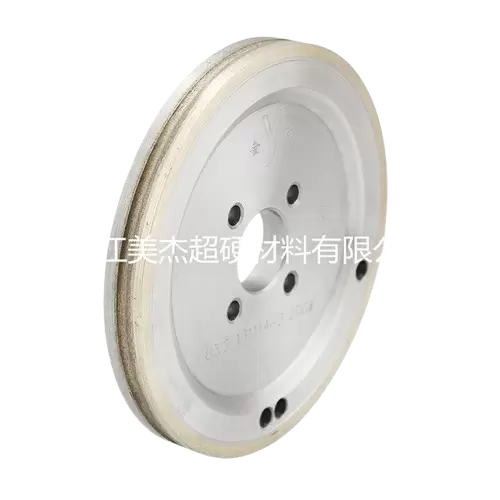
A diamond grinding wheel is a specialized abrasive tool that uses diamond grains as the primary cutting material to remove material from a workpiece through controlled grinding processes. Because diamond is the hardest natural material, it can maintain sharp cutting edges even when processing extremely hard and brittle materials.
Unlike traditional grinding wheels that commonly use abrasives such as aluminum oxide or silicon carbide, diamond grinding wheels provide higher cutting ability and longer service life when working with non-metallic hard materials.
During the grinding process, thousands of diamond particles act as microscopic cutting edges. As the wheel rotates at high speed, these diamond grains continuously contact the workpiece surface, removing small amounts of material and creating precise shapes, edges, and surface finishes.
This unique working mechanism makes diamond grinding tools especially suitable for industries where conventional machining methods cannot achieve the required accuracy.
For example, in glass manufacturing, diamond tools are widely used for edge grinding, profiling, polishing, and shaping processes. In photovoltaic production, they help manufacturers achieve stable processing performance for large-area solar glass. In semiconductor and crystal processing, their ultra-precision capability supports advanced manufacturing requirements.
Although a diamond grinding wheel may appear simple from the outside, its performance depends on the interaction between multiple components, including diamond abrasives, bonding materials, and wheel structure.
The main components include:
The selection and design of each component determine important performance factors, including grinding efficiency, tool durability, heat resistance, and processing accuracy.
For manufacturers working with precision materials, choosing the correct wheel structure is essential. A grinding wheel designed for photovoltaic glass processing, for example, may require different characteristics compared with a tool used for semiconductor materials or automotive glass.
The reason diamond is widely used in precision grinding applications is its exceptional physical properties.
Diamond offers:
These advantages allow superhard material tools to achieve machining results that are difficult to obtain with conventional abrasives.
However, diamond hardness alone does not guarantee excellent grinding performance. The final performance of a diamond grinding wheel depends on multiple factors, including diamond concentration, bonding technology, wheel design, processing parameters, and cooling conditions.
Professional manufacturers must carefully balance these factors to create tools suitable for specific applications.
Different abrasive technologies provide different levels of performance. Understanding the differences between diamond and traditional grinding wheels helps manufacturers select the right solution for their production needs.
| Feature | Diamond Grinding Wheel | Conventional Grinding Wheel |
|---|---|---|
| Abrasive Material | Diamond grains | Aluminum oxide or silicon carbide |
| Hardness Level | Extremely high | Moderate |
| Processing Accuracy | Suitable for precision machining | Suitable for general grinding |
| Tool Life | Long service life with proper application | Usually shorter service life |
| Typical Applications | Glass, ceramics, crystals, carbide, semiconductor materials | General metal and surface grinding |
For industries requiring high precision, a diamond grinding wheel provides advantages in reducing processing defects, improving consistency, and increasing production efficiency.
The working principle of a diamond grinding wheel is based on controlled material removal through thousands of microscopic cutting actions.
When the wheel rotates at high speed, diamond abrasive grains on the working surface contact the material being processed. Each diamond particle acts like a tiny cutting tool, removing small chips from the surface.
The grinding process generally includes several stages:
Unlike cutting tools that rely on a limited number of edges, grinding wheels contain thousands of abrasive points working simultaneously. This allows them to achieve smooth finishes and precise dimensional control.
For brittle materials such as glass and ceramics, controlling this process is particularly important. Excessive cutting force can cause cracking, chipping, or surface damage. Therefore, professional glass processing tools require carefully optimized diamond concentration, bond strength, and grinding parameters.
The performance of a diamond grinding wheel is influenced by several technical factors. Selecting the correct combination is essential for achieving stable production results.
Key factors include:
For example, high-speed glass processing lines require wheels with excellent stability and wear resistance, while precision optical or electronic glass applications may prioritize surface quality and minimal edge damage.
Therefore, choosing a grinding wheel should always consider the material, machine type, processing speed, and final product requirements.
The performance of a diamond grinding wheel is determined not only by the quality of diamond abrasives but also by the bonding technology used to hold the diamond particles in place. The bond system controls how effectively the abrasive grains interact with the workpiece, how quickly the wheel wears, and how stable the grinding process remains during continuous operation.
Different manufacturing industries have different requirements for grinding performance. For example, glass manufacturers often require excellent surface quality and low chipping performance, while photovoltaic and automotive glass producers may prioritize high efficiency and long tool life. Semiconductor and crystal processing applications require even higher precision because microscopic defects can affect the performance of the final product.
Therefore, selecting the correct type of diamond grinding wheel is an important decision for improving machining accuracy, reducing production costs, and maintaining stable manufacturing performance.
The three major types of diamond grinding wheels used in industrial applications are resin bond diamond wheels, metal bond diamond wheels, and electroplated diamond wheels. Each technology provides different advantages depending on the material being processed and the required production conditions.
Resin bond diamond grinding wheels use resin materials as the bonding medium to secure diamond abrasive grains. Compared with other bonding systems, resin bonds provide a relatively softer grinding action, which allows the wheel to adapt better to precision processing requirements.
This characteristic makes resin bond wheels especially suitable for applications involving fragile and high-value materials. During glass processing, for example, excessive grinding force can cause edge chipping, micro-cracks, or surface defects. A properly designed resin bond wheel can provide smoother material removal and better control over the grinding process.
In industries such as optical glass, display glass, and photovoltaic glass manufacturing, surface quality is a key factor influencing product performance. The ability of resin bond wheels to achieve fine finishing makes them an important choice for precision grinding applications.
The design of a Resin Bond Diamond Grinding Wheel usually considers several factors, including diamond particle size, concentration, bond hardness, and processing speed. By adjusting these parameters, manufacturers can create grinding solutions suitable for different machines and materials.
For example, a wheel designed for glass edge polishing may focus more on surface finish, while a wheel used for production-line processing may require a balance between efficiency and durability.
Metal bond diamond grinding wheels are manufactured by using metallic materials to hold diamond particles firmly within the working layer. Because metal bonds provide stronger diamond retention, these wheels are widely used in applications requiring long service life and high wear resistance.
During high-volume manufacturing, frequent tool replacement can significantly increase production costs and reduce equipment efficiency. Metal bond technology helps extend grinding wheel life by maintaining the cutting ability of diamond particles for a longer period.
This makes metal bond wheels suitable for demanding applications such as photovoltaic glass production, automotive glass processing, ceramic machining, and other industrial grinding operations where continuous production is required.
A properly engineered Metal Bond Diamond Grinding Wheel provides stable performance under higher grinding loads. It can maintain consistent cutting behavior even when processing hard materials or operating under intensive production conditions.
However, metal bond wheels are not always the best choice for every application. Since the bond structure is harder, the grinding process must be carefully optimized to achieve the desired balance between material removal efficiency and surface quality.
Professional grinding tool manufacturers evaluate factors such as material characteristics, machine parameters, and production targets before recommending the most suitable wheel structure.
Electroplated diamond grinding wheels are produced by attaching diamond particles directly onto a metal substrate through an electroplating process. Unlike resin and metal bond wheels, electroplated wheels typically expose diamond particles more prominently, allowing them to provide sharp cutting performance.
This structure gives electroplated wheels excellent cutting efficiency and makes them suitable for applications requiring precise shapes, profiles, and complex geometries.
In precision manufacturing, maintaining the original shape of a grinding tool is essential. If the tool profile changes significantly during operation, the accuracy of the processed component may decrease. Electroplated diamond wheels can provide better profile retention in many special machining applications.
They are commonly used for applications such as precision forming, special-shaped grinding, and complex glass processing. For manufacturers producing customized components or requiring strict dimensional control, electroplated solutions can provide significant advantages.
Choosing between resin bond, metal bond, and electroplated technologies depends on the specific processing requirements. Factors such as material hardness, required surface quality, machining speed, and production volume all influence the final selection.
| Bond Type | Characteristics | Typical Applications |
|---|---|---|
| Resin Bond | Provides smooth grinding performance and excellent surface finishing | Precision glass processing, optical materials, display glass |
| Metal Bond | Offers strong diamond retention and long service life | High-volume production, photovoltaic glass, industrial grinding |
| Electroplated Bond | Provides sharp cutting ability and accurate profile control | Special-shaped grinding, precision machining |
Understanding the differences between bonding systems helps manufacturers select the most appropriate diamond grinding wheel for their production requirements.
As manufacturing industries continue to develop toward higher precision and automation, the demand for advanced grinding technologies continues to increase. Many modern materials used in industrial production are difficult to process because they combine high hardness with brittle characteristics.
Materials such as glass, crystal, ceramics, carbide, and semiconductor substrates require tools that can remove material accurately while minimizing defects. This is why diamond grinding wheels have become an essential solution in many advanced manufacturing fields.
Glass is widely used in industries including architecture, automotive, photovoltaic energy, and consumer electronics. However, glass processing presents unique challenges because the material is hard, brittle, and sensitive to mechanical stress.
During manufacturing, glass components often require precise edge grinding, shaping, polishing, and beveling processes. Poor tool performance can lead to defects such as edge chipping, uneven surfaces, and inconsistent dimensions.
Compared with conventional abrasives, Glass Processing Grinding Wheels provide better control during high-precision machining. The hardness of diamond allows efficient material removal, while optimized wheel structures help manufacturers maintain stable processing quality.
In applications such as glass edging machines, CNC glass processing equipment, and automatic production lines, diamond grinding technology helps improve production efficiency while maintaining strict quality standards.
For manufacturers producing large quantities of glass products, tool consistency is especially important. A stable grinding solution can reduce downtime, improve production yield, and lower the overall processing cost.
The rapid expansion of renewable energy has created increasing demand for photovoltaic modules and solar glass products. As photovoltaic manufacturing becomes more automated and efficient, the requirements for processing tools have become increasingly strict.
Photovoltaic glass is typically large and thin, requiring precise edge treatment before assembly. During production, manufacturers must maintain consistent processing quality across thousands of pieces to ensure reliable module performance.
A specialized PV Glass Grinding Wheel helps address these challenges by providing stable grinding performance for solar glass processing applications.
In photovoltaic production lines, diamond grinding wheels are used for processes such as edge grinding, shaping, and precision finishing. The ability to maintain consistent performance during long operating cycles is especially valuable for large-scale solar glass manufacturers.
Meijie develops customized Photovoltaic Glass Grinding Wheel solutions designed for different processing equipment and production requirements, helping customers improve efficiency and maintain product quality.
Automotive glass manufacturing requires extremely high standards because glass components directly affect vehicle safety, appearance, and structural performance.
Windshields and other vehicle glass parts often involve curved designs and complex shapes. These products require grinding tools capable of achieving accurate profiles while minimizing surface defects.
A reliable Automotive Glass Grinding Wheel provides stable processing performance for applications such as edge grinding, shaping, and finishing of vehicle glass components.
Compared with ordinary glass products, automotive glass usually requires stricter dimensional control. Even small processing variations may influence assembly accuracy or product appearance.
For this reason, automotive glass manufacturers often rely on customized diamond grinding solutions that match specific machines, materials, and production conditions.
Consumer electronics products have created new demands for precision glass manufacturing. Smartphone cover glass, touch panels, and display components require extremely smooth surfaces and accurate dimensions.
During processing, manufacturers must avoid defects that may affect product appearance or functionality. The grinding process needs to achieve high precision while maintaining production efficiency.
Diamond grinding tools are widely used in display glass processing because they provide excellent cutting stability and surface control.
For thin and delicate glass materials, the selection of grinding wheel structure is particularly important. The wrong tool design may increase the risk of cracks, scratches, or excessive material loss.
By combining suitable diamond specifications with optimized bonding technology, manufacturers can achieve more reliable processing results.
Semiconductor manufacturing represents one of the most demanding fields for precision machining. Materials used in semiconductor production, including silicon, sapphire, and other crystals, often require extremely accurate processing methods.
In these applications, semiconductor diamond tools provide the hardness and precision required for advanced material machining.
The development of smaller and more powerful electronic devices continues to increase manufacturing requirements. As tolerances become tighter, precision grinding technology becomes increasingly important.
Advanced precision diamond tools support manufacturers in achieving stable processing performance for crystal materials, hard ceramics, and other challenging substrates.