
Sep 11,2026
What Causes Surface Damage During Wafer Grinding?
PV glass, appliance glass, and automotive glass all require controlled edge processing, but their grinding requirements are not identical. Differences in glass thickness, edge geometry, production speed, dimensional accuracy, and equipment configuration can significantly affect glass grinding wheel selection.
A grinding wheel that performs well on a high-volume photovoltaic glass production line may not be the best choice for automotive glass with complex edge profiles. Likewise, appliance glass processing may place greater emphasis on dimensional stability and profile retention than on the high-speed production requirements commonly associated with PV glass.
For manufacturers comparing PV glass grinding wheel, appliance glass grinding wheel, and automotive glass grinding wheel options, the key is to look beyond the glass category itself. Diamond grit size, wheel profile, bond characteristics, service life, equipment compatibility, and processing conditions all influence the final choice.
This guide compares the three types of glass grinding wheels, explains the main technical differences, and provides a practical framework for selecting a suitable wheel for each application.
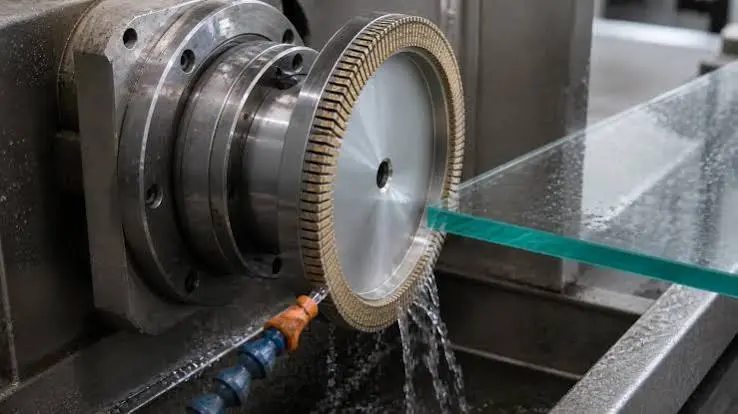
Glass grinding is not simply a matter of removing material from an edge. The grinding wheel must maintain controlled contact with the glass while removing the required amount of material without creating excessive chipping, burning, cracking, vibration, or dimensional variation.
Although PV, appliance, and automotive glass are all processed using diamond-based abrasive tools, their production requirements can be quite different.
PV glass production, for example, often emphasizes high throughput and stable edge quality. A production line may process large quantities of glass continuously, making grinding efficiency and wheel service life important considerations. The wheel must remain sharp and stable while supporting consistent production performance.
Appliance glass can involve CNC machining centers and various glass edging machines. In these applications, dimensional accuracy, profile retention, sharpness, and controlled material removal can become especially important. Some operations may also involve heavy grinding or deep-cut, creep-feed applications.
Automotive glass presents another set of requirements. Edge geometry and profile accuracy can be particularly important because automotive glass may require round, ladder, flat, or other specific edge configurations. The grinding wheel therefore needs to maintain its intended shape throughout processing.
These differences explain why glass grinding wheel selection should be based on the complete processing application rather than simply choosing a general-purpose wheel.
For manufacturers comparing different applications, Glass Processing Grinding Wheels can be evaluated according to glass type, thickness, edge geometry, machine configuration, grinding conditions, and required production performance.
The most important differences can be summarized by looking at what each application prioritizes during grinding.
| Glass Application | Main Processing Requirements | Key Wheel Considerations | Typical Priority |
|---|---|---|---|
| PV Glass | High efficiency, stable edge quality, continuous production | Sharpness, grit, service life, equipment compatibility | Production efficiency |
| Appliance Glass | Precision, profile retention, controlled material removal | Sharpness, dimensional stability, wheel life | Precision and stability |
| Automotive Glass | Edge geometry, profile accuracy, shape retention | Wheel profile, grit, equipment compatibility | Profile accuracy |
The table provides a general comparison, but actual glass grinding wheel specifications should still be determined according to the production process. Glass thickness, grinding depth, feed rate, machine type, wheel dimensions, and required edge finish can all change the appropriate specification.
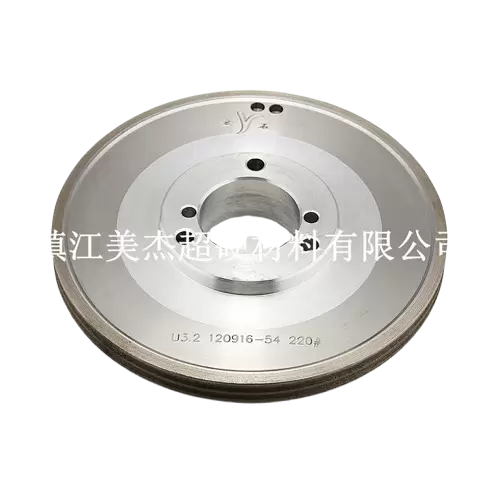
PV glass processing is closely associated with high-volume manufacturing. The grinding wheel must therefore balance cutting efficiency with consistent edge quality and a sufficiently long service life.
A PV glass grinding wheel is primarily used for edge grinding of photovoltaic glass. Compared with applications where production volume is lower or edge geometry is more complex, PV processing can place greater emphasis on stable high-speed grinding and long-term abrasive performance.
Meijie's PV glass grinding wheel uses diamond as the core abrasive and can be produced with premium bonds such as bronze alloy. The product is developed for photovoltaic glass edge grinding and is compatible with mainstream equipment from Bottero, KLW, Yihai, Demai, and Faborman.
One important consideration is grinding speed. Under applicable conditions, the wheel can support edge grinding speeds of 10–18 meters per minute, while a triple-head grinding machine can reach a feed rate of up to 18 m/min. This makes grinding efficiency an important characteristic for high-throughput PV glass processing.
Wheel life is another consideration. The product has a service life exceeding 60,000 meters per slot in applicable scenarios, with a typical lifespan of more than 50,000 meters per set under relevant conditions. Actual performance depends on processing parameters and operating conditions, but longer wheel life can help reduce replacement frequency and consumable costs.
The product also supports different glass thicknesses and wheel configurations. The available outer diameter ranges from 80 to 200 mm, with inner diameter options of 12, 22, 50, 60, and 90 mm. Diamond grit sizes range from 80# to 400#, while arc and notch profiles are available for different edge grinding requirements.
For manufacturers specifically processing photovoltaic glass, the PV Glass Grinding Wheel provides an application-specific option rather than requiring a general-purpose wheel to handle all glass processing conditions.
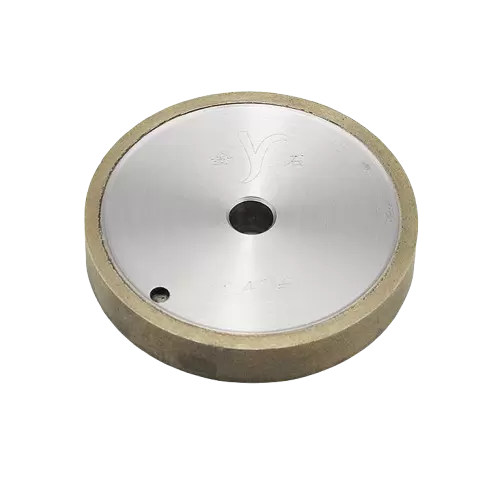
Appliance glass processing can involve different types of CNC machining centers and glass edging machines. Compared with high-volume PV processing, the grinding requirements may place greater emphasis on dimensional accuracy, profile stability, and controlled material removal.
The appliance glass grinding wheel is developed around these requirements. Diamond abrasive provides the cutting capability, while the wheel construction is designed to combine sharpness with form stability. This is particularly relevant when the process requires the wheel to maintain its intended dimensions and profile during extended grinding.
Another important characteristic is the manufacturing process. The appliance glass grinding wheel uses vacuum hot-press sintering at 800–1000°C. This process helps minimize diamond oxidation and damage during manufacturing. Professional dynamic balancing is also used to support smooth operation and reduce vibration during grinding.
These characteristics become especially relevant for applications involving heavy grinding or deep-cut, creep-feed operations. The wheel is intended to support high stock removal while maintaining dimensional stability and avoiding excessive deformation.
The product is available with outer diameters from 80 to 200 mm and inner diameters of 12 or 22 mm for mainstream edging equipment. Diamond grit sizes range from 80# to 400#, allowing the wheel specification to be matched to different processing and finish requirements. It can process glass thicknesses from 2 to 18 mm.
Service life is another factor in overall processing cost. Under applicable conditions, the wheel has a service life exceeding 20,000 meters. A higher grinding ratio and reusable wheel design can reduce the frequency of wheel changes and contribute to more stable production.
For manufacturers whose primary requirements include precision, form stability, and controlled material removal, the Appliance Glass Grinding Wheel represents a more application-focused option for appliance glass processing.
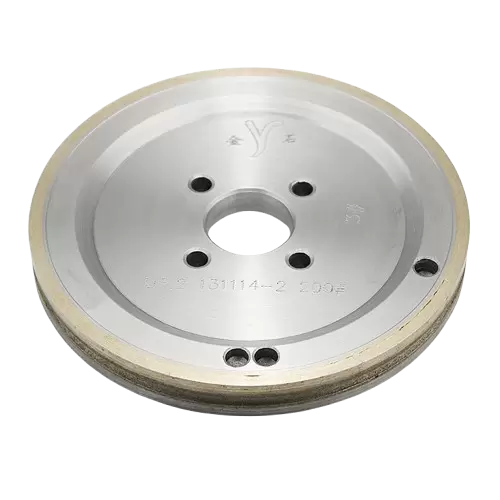
Automotive glass processing has a particularly strong connection with edge geometry. Different automotive glass products may require different edge configurations, making wheel profile an important consideration in addition to abrasive sharpness and wear resistance.
An automotive glass grinding wheel therefore needs to provide stable grinding performance while maintaining the required shape and profile during processing.
Meijie's automotive glass grinding wheel uses high-quality diamond as the core abrasive and combines it with an M-type binder. The product is designed to provide sharpness, stable shape retention, and a high grinding ratio. Its design also supports reuse, helping maintain processing efficiency over an extended operating period.
The available configurations demonstrate why automotive glass cannot always be treated as a general glass grinding application. Product specifications include V-type profiles as well as round edge, ladder edge, and flat edge configurations. These different profiles allow the wheel to match specific automotive glass edge-processing requirements.
Equipment compatibility is also an important factor. The product is customized for glass edging machines such as Bandong and Baichao, while OEM customization allows parameters to be adjusted according to specific equipment models and processing technologies.
For automotive glass manufacturers, the key consideration is therefore not simply whether a wheel can grind glass. The more important question is whether the wheel can maintain the required edge geometry and processing accuracy throughout production.
The Automotive Glass Grinding Wheel is intended for these application-specific requirements, particularly where profile accuracy, shape retention, and equipment matching are important.
The differences between PV, appliance, and automotive grinding wheels become clearer when their individual specifications are examined.
The glass category provides an important starting point, but it does not determine every wheel parameter by itself. The final specification should reflect the interaction between the glass, machine, wheel, and grinding process.
Diamond grit size is one of the most recognizable specifications of a diamond glass grinding wheel. It affects how the abrasive interacts with the glass and contributes to the balance between material removal and finished edge quality.
Coarser diamond grit can generally support more aggressive material removal, while finer grit can be used when greater attention is placed on finishing requirements. However, it would be inaccurate to assume that one glass category always requires one specific grit range.
The appropriate grit depends on factors such as glass thickness, stock removal, grinding depth, feed rate, required edge quality, and machine conditions.
The product ranges illustrate this flexibility. Both PV and appliance glass grinding wheels are available in grit sizes from 80# to 400#. Automotive glass grinding wheels in the listed configurations include 150# to 400# and specific 200# options.
This overlap demonstrates an important point: diamond grit size should be selected according to the actual grinding process rather than the glass category alone.
For manufacturers comparing glass grinding wheel grit size, it is therefore more useful to define the required material removal and edge finish first, then select an appropriate abrasive specification.
Wheel profile is another major difference between different glass grinding applications.
The profile determines how the abrasive contacts the glass edge and directly influences the shape that can be produced. When the edge geometry is relatively straightforward, a standard profile may be sufficient. When the glass requires a specific contour, the wheel profile becomes much more critical.
This is especially evident in automotive glass processing. Available automotive configurations include V-type, round edge, ladder edge, and flat edge profiles. The selected profile needs to correspond with the required edge configuration and the machine's processing method.
PV glass grinding also requires different wheel shapes for specific applications. The PV product supports arc-type profiles such as R200/50/60/90 and notch-type profiles including 2.0, 3.2, 3.5, and 4.0 mm.
This means glass grinding wheel profile is not exclusively an automotive concern. Instead, profile selection is application-specific and should be matched to the edge geometry required by the production process.
The bond is another factor affecting grinding wheel behavior. A suitable bond needs to hold the diamond abrasive securely while allowing the wheel to maintain the cutting characteristics required by the process.
Sharpness is important because a wheel that cuts efficiently can reduce unnecessary grinding resistance and help maintain processing efficiency. At the same time, excessive abrasive wear or loss of profile can negatively affect dimensional accuracy and edge quality.
The three product types use different construction approaches. The PV glass grinding wheel can use a bronze alloy bond, while the appliance glass grinding wheel combines diamond abrasives with bonds such as bronze alloy and is manufactured using vacuum hot-press sintering. The automotive glass grinding wheel uses an M-type binder.
These differences should not be interpreted as a simple ranking of which bond is universally better. Bond selection needs to correspond to the specific grinding conditions, abrasive requirements, wheel profile, and equipment.
For this reason, manufacturers should consider sharpness, abrasive retention, wear behavior, and profile stability together rather than evaluating the bond in isolation.
Service life has a direct relationship with production cost because frequent wheel replacement can increase downtime, labor requirements, and consumable consumption.
The three products demonstrate different stated service-life characteristics. The PV glass grinding wheel can provide more than 60,000 meters per slot under applicable conditions, while its typical service life can exceed 50,000 meters per set in relevant scenarios. The appliance glass grinding wheel has a service life exceeding 20,000 meters under applicable conditions. The automotive glass grinding wheel uses a high grinding ratio design that supports longer use and reuse.
These figures should not be treated as a direct ranking of the three applications. A wheel's actual service life can change significantly with glass thickness, grinding depth, feed rate, wheel specification, machine condition, cooling, and other operating parameters.
Instead, glass grinding wheel service life should be evaluated together with grinding efficiency and the total production process. A wheel with a suitable grinding ratio and stable wear behavior can provide value not only through longer use but also through reduced changeover frequency and more consistent processing.
Glass grinding wheel selection cannot be separated from the machine on which the wheel will operate.
Even when two manufacturers process the same type of glass, their required wheel specifications may differ because their equipment has different mounting dimensions, grinding heads, spindle configurations, or operating parameters.
Important equipment-related considerations include:
The PV glass grinding wheel, for example, is available with outer diameters from 80 to 200 mm and multiple inner diameter options to accommodate different equipment requirements. Its compatibility with Bottero, KLW, Yihai, Demai, and Faborman equipment further demonstrates the importance of machine matching.
The automotive glass grinding wheel is customized for machines such as Bandong and Baichao, while the appliance glass grinding wheel is suitable for CNC machining centers and various glass edging machines.
Equipment compatibility also explains why OEM customization can be valuable. When a standard wheel specification does not fully match a production line, manufacturers may need adjustments to dimensions, profiles, grit, or other parameters.
A custom glass grinding wheel should therefore be evaluated according to the actual machine and processing technology rather than selected only by the name of the glass application.
The most appropriate wheel depends on the combination of glass type, processing method, equipment, and production requirements.
A PV glass grinding wheel is generally the most relevant choice when processing photovoltaic glass, particularly in production environments where high throughput, stable edge quality, and long wheel life are important.
The PV wheel's available grit range, multiple profiles, broad glass thickness capability, and compatibility with mainstream PV processing equipment allow the specification to be adapted to different production conditions.
For high-volume solar glass processing, wheel sharpness, feed rate, service life, and stable edge quality should be evaluated together rather than focusing on one parameter alone.
An appliance glass grinding wheel is more appropriate when the application involves appliance glass and places strong emphasis on dimensional stability, profile retention, sharpness, and controlled material removal.
The vacuum hot-press sintering process, dynamic balancing, broad grit range, and ability to support heavy grinding or deep-cut applications make this type of wheel suitable for production environments where both grinding efficiency and precision matter.
The machine configuration should still be checked before selecting the final specification.
An automotive glass grinding wheel becomes particularly relevant when automotive glass processing requires specific edge geometries and stable profile retention.
V-type, round edge, ladder edge, and flat edge configurations can address different processing requirements. Equipment compatibility and OEM customization are also valuable when the production line has specific machine or process requirements.
For automotive applications, wheel profile should therefore receive as much attention as grit size and abrasive performance.
Some grinding wheels may be capable of processing more than one type of glass under certain conditions, but that does not mean one universal specification is optimal for every application.
The requirements of PV, appliance, and automotive glass can overlap in some areas. For example, all three may require diamond abrasives, appropriate grit selection, stable grinding, and controlled edge quality. However, the priority given to each characteristic can be different.
PV processing may place greater emphasis on production efficiency and long service life. Appliance glass may require a strong balance between material removal and dimensional stability. Automotive glass can place greater emphasis on edge geometry and profile retention.
Several factors should therefore be evaluated before attempting to use the same wheel across different applications:
For low-demand or general-purpose processing, a suitable wheel may sometimes serve multiple applications. For high-volume or precision manufacturing, however, application-specific wheel selection is generally more appropriate because the wheel can be matched more closely to the actual production conditions.
The goal is not simply to find a wheel that can grind the glass. The goal is to find a wheel that can provide the required combination of efficiency, edge quality, service life, profile stability, and equipment compatibility.
PV, appliance, and automotive glass grinding wheels share the same fundamental purpose—controlled abrasive processing of glass edges—but their priorities are not identical. PV applications tend to emphasize grinding efficiency, stable edge quality, and service life, while appliance glass processing places greater attention on precision, profile retention, and controlled material removal. Automotive glass requires particular consideration of edge geometry, profile accuracy, and shape retention.
The right glass grinding wheel should therefore be selected according to the complete processing environment. Glass type, thickness, edge geometry, diamond grit, wheel profile, bond, equipment configuration, grinding speed, and required finish all contribute to the final specification. For manufacturers seeking consistent results, application-specific wheel selection provides a more reliable approach than treating PV, appliance, and automotive glass as interchangeable grinding applications.