
Aug 13,2026
PV vs Appliance vs Automotive Glass Grinding Wheels: What Are the Differences?
CNC diamond grinding wheels are primarily used for precision glass grinding, edge processing, edge shaping, and finishing on CNC machining centers and glass edging equipment. By combining diamond abrasive with a suitable bonding system and controlled machine movement, these wheels support consistent material removal and stable edge processing across repeated production cycles.
The application is particularly relevant to glass manufacturers that need controlled edge dimensions, reliable surface quality, and reasonable wheel life. However, the performance of a CNC diamond grinding wheel does not depend on the abrasive alone. Glass thickness, wheel specification, machine configuration, grinding conditions, and the required edge geometry all affect the final result.
For this reason, selecting a wheel based only on its name or abrasive type is rarely sufficient. The actual processing task should determine the wheel specification.
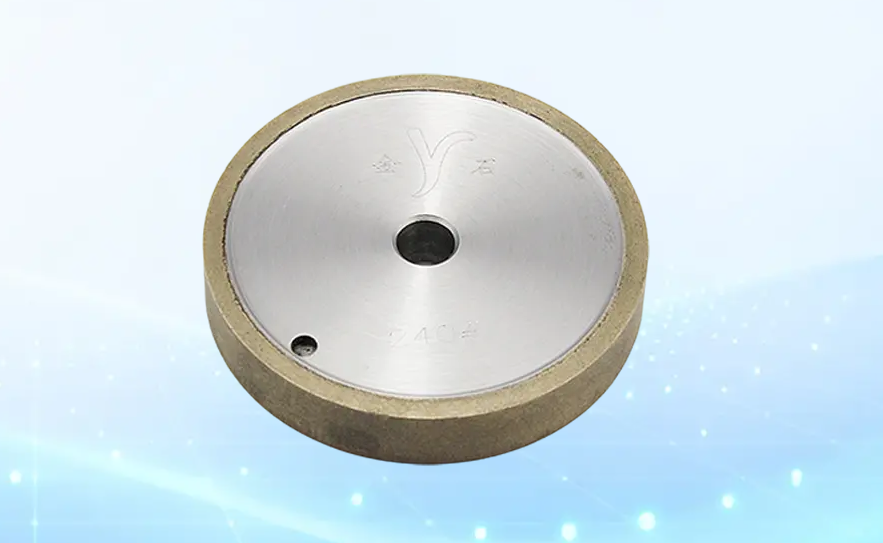
A CNC diamond grinding wheel is an abrasive tool designed to work with CNC machining centers or glass edging equipment. Its main purpose is controlled material removal from the glass surface, particularly along edges or shaped sections where dimensional consistency and repeatable processing are required.
Compared with general-purpose abrasive tools, diamond wheels are designed around the properties of diamond as a superabrasive. The diamond particles perform the cutting action, while the bonding system holds the abrasive in position during operation. Wheel geometry also plays an important role because the working profile must correspond with the required processing path and edge shape.
For CNC glass processing, the wheel and machine therefore function as one processing system. The CNC equipment determines the movement and positioning of the workpiece or tool, while the grinding wheel performs the actual abrasive cutting. A suitable combination can provide controlled grinding over repeated production cycles.
One of the most common applications for CNC diamond grinding wheels is glass edge grinding. After cutting, glass edges may require additional material removal to achieve the specified geometry, dimensions, or finish. CNC equipment can control the movement of the grinding tool along the programmed path, while the diamond wheel removes material from the edge.
The process can be used for applications where straight, shaped, or otherwise defined edge geometries are required. Consistent wheel behavior is important because changes in wheel wear or profile can gradually affect the processed edge.
For production environments, this becomes more significant as processing volumes increase. A wheel that maintains its working characteristics over a reasonable service interval can reduce the frequency of wheel replacement and help limit interruptions to production.
The exact result still depends on the complete process. Machine rigidity, spindle condition, feed rate, wheel specification, cooling, and glass characteristics can all influence edge quality. A diamond wheel is therefore an important component of the process, but it should not be considered the only factor controlling the finished edge.
CNC grinding is also used when the glass edge requires a defined shape rather than simple material removal from a flat edge. In these applications, the geometry of the wheel becomes particularly important.
Profile grinding requires the abrasive tool to maintain a sufficiently stable working shape while processing the glass. Excessive wheel wear or profile change can alter the geometry produced by the machine, particularly during longer production runs.
For this reason, shape retention is an important performance consideration when selecting a CNC grinding wheel. A suitable wheel should maintain its intended working profile under the specified operating conditions while providing an appropriate balance between material removal and surface quality.
CNC control provides the positional accuracy required to follow a programmed path, but the wheel must still be capable of producing the intended profile. The machine and abrasive tool therefore need to be matched rather than evaluated separately.
Some glass processing operations require more than basic edge removal. The grinding process may also be used to refine an edge, control dimensions, or prepare the glass for subsequent manufacturing steps.
In these situations, precision glass grinding depends on stable abrasive behavior and appropriate wheel specifications. Excessive vibration, inconsistent wheel wear, unsuitable grit, or an incorrect wheel profile can negatively affect the processed surface.
A CNC diamond wheel can support repeatable processing when its specification matches the machine and application. However, the required finish should always be considered together with the material removal requirement. A specification optimized for aggressive grinding may not be the same as one selected for a finer finishing operation.
Glass thickness is another important factor in CNC grinding applications because it influences the amount of material being processed and the required grinding conditions.
The Meijie CNC Diamond Wheel is specified for glass thicknesses from 2 to 18 mm, providing coverage for a broad range of glass processing requirements. Available wheel specifications include outer diameters from 80 to 200 mm, inner diameters of 12 mm or 22 mm, and grit sizes from 80# to 400#.
| Parameter | Specification |
|---|---|
| Glass Thickness | 2–18 mm |
| Outer Diameter | 80–200 mm |
| Inner Diameter | 12 mm / 22 mm |
| Grit Size | 80#–400# |
These specifications should not be interpreted as a universal setting for every CNC application. The appropriate wheel still depends on the equipment, processing operation, edge geometry, and required result.
Glass is a hard and brittle material, so abrasive selection has a direct effect on the efficiency and stability of material removal. Diamond is widely used in precision grinding applications because of its high hardness and cutting capability.
For CNC processing, however, abrasive performance is only one part of the equation. Wheel wear, profile stability, machine compatibility, and processing requirements must also be considered.
The abrasive particles are responsible for removing material from the glass during grinding. A high-quality diamond abrasive can provide effective cutting action when the wheel specification and operating conditions are appropriate.
This is particularly useful for CNC glass edge processing, where the tool may need to remove material repeatedly along a defined path. Effective cutting allows the process to achieve the required material removal without relying on excessive mechanical force.
The balance is important. A grinding wheel that is too aggressive for the application may create unnecessary surface damage or increase process instability, while an unsuitable specification may reduce productivity. Wheel selection therefore needs to reflect the actual grinding task rather than simply maximizing cutting capability.
Wheel wear has a direct relationship with production consistency. As the abrasive working surface changes, the grinding behavior and effective wheel geometry can also change. This is particularly relevant when the wheel is responsible for producing a defined glass edge or profile.
The Meijie CNC Diamond Wheel is designed with wear resistance and shape retention as key performance characteristics. Its stated service life exceeds 20,000 meters, while the actual service interval will depend on factors such as glass characteristics, grinding conditions, machine settings, and wheel specification.
A longer usable life can reduce the frequency of wheel replacement. In continuous production, fewer replacement events may also reduce machine interruptions and the labor associated with tool changes.
Service life should nevertheless be evaluated using actual production data rather than treated as a fixed value. Two applications using the same wheel can produce different results when their grinding conditions are substantially different.
CNC manufacturing is often selected because the same programmed operation can be repeated with a high degree of process control. The abrasive tool must therefore maintain reasonably stable performance throughout the production cycle.
For a CNC diamond grinding wheel, consistent performance involves more than abrasive durability. Wheel geometry, balance, bonding characteristics, machine compatibility, and operating conditions can all influence the grinding process.
A stable wheel can help maintain predictable material removal and reduce unwanted changes in edge geometry as production progresses. This is especially relevant when the same glass specification is processed in large quantities.
At the same time, machine maintenance remains essential. Spindle runout, vibration, improper mounting, inadequate cooling, or incorrect process parameters can affect results even when the grinding wheel itself is correctly specified.
Choosing a CNC diamond grinding wheel should begin with the actual processing requirement rather than the wheel name alone. A suitable specification needs to match the material, machine, grinding operation, and required edge result.
The main factors generally include:
These factors are closely connected. Changing one parameter may affect the suitability of the others.
Glass thickness is one of the first specifications to check because it influences the grinding load and processing conditions. Thin glass and thicker glass may require different process settings even when the general grinding operation is similar.
For the Meijie CNC Diamond Wheel, the stated processing range is 2–18 mm. This provides a useful reference when assessing whether the wheel is applicable to a particular glass product.
However, thickness alone should not determine the selection. The required edge geometry, material removal amount, processing speed, and quality requirements also need to be considered.
A manufacturer processing a thin glass sheet for a finishing operation may have very different wheel requirements from a manufacturer performing more substantial edge removal on thicker glass.
The physical dimensions of the wheel must correspond with the CNC machine and its mounting arrangement. The outer diameter determines the available working geometry and is also related to the machine's operating configuration. The inner diameter must match the required mounting interface.
The CNC Diamond Wheel is available with outer diameters from 80–200 mm and inner diameters of 12 mm or 22 mm. These specifications provide different configuration options, but the correct choice must be confirmed against the actual equipment.
Machine compatibility should also include more than physical dimensions. Spindle speed, available power, cooling arrangements, wheel clearance, and the intended grinding position can affect whether a particular wheel is appropriate.
A wheel that fits mechanically may still require further evaluation before being used as the production solution.
Grit size affects the characteristics of the abrasive working surface and should be considered in relation to the desired grinding result. Coarser and finer abrasive specifications can produce different balances between material removal and finishing performance.
The Meijie CNC Diamond Wheel is available in 80#–400# grit specifications. The appropriate grit should be selected according to the grinding operation, required edge quality, and process conditions.
Grit should not be considered independently from wheel bond, machine settings, or glass characteristics. The same grit can behave differently under different process conditions, so actual production requirements remain the basis for final selection.
A CNC diamond grinding wheel is a suitable option when the production process requires controlled grinding of glass on CNC machining centers or glass edging equipment. It is particularly relevant when edge processing needs to be repeated across multiple workpieces with consistent tool movement and defined processing requirements.
Several practical conditions can indicate that this type of wheel is worth considering:
The intended application should always be evaluated before selecting the final specification. For example, a wheel selected for edge grinding may not have the same requirements as one used for a particular profile or finishing operation.
For applications requiring a dedicated abrasive tool for CNC glass edging, the CNC Diamond Wheel is designed for CNC machining centers and glass edging equipment. Its specification covers glass thicknesses from 2 to 18 mm, with multiple wheel dimensions and grit options available for different processing requirements.
The main purpose of CNC diamond grinding wheels is controlled and repeatable material removal in applications such as glass edge grinding, edge shaping, profile processing, and finishing. Their value comes from the interaction between diamond abrasive performance, wheel geometry, machine control, and the requirements of the glass being processed.
The selection process should therefore start with the actual operation: glass type and thickness, required edge geometry, machine configuration, wheel dimensions, and expected production conditions. A wheel specification that fits these requirements is more likely to provide stable processing than a selection based only on general performance claims.
For manufacturers using CNC equipment for glass processing, the most practical approach is to evaluate the grinding wheel as part of the complete machining system.