
Aug 20,2026
How to Extend the Service Life of Glass Grinding Wheels
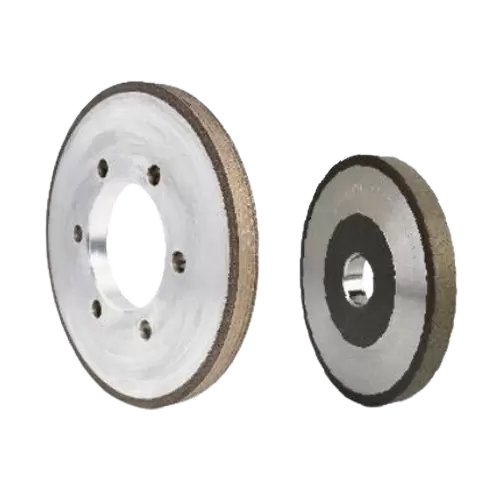
A grinding wheel is not defined by its abrasive alone. In a diamond grinding wheel, diamond particles perform the cutting action, while the wheel bond holds those particles within the working layer and determines how they are retained and released during grinding. This relationship has a direct effect on cutting behavior, wear, profile stability, and the useful life of the wheel.
For glass processing, bond selection deserves particular attention because glass is hard and brittle, and edge grinding requires controlled material removal rather than simply aggressive cutting. A suitable glass grinding wheel bond must provide an appropriate balance between abrasive retention and the exposure of fresh cutting edges. The correct balance depends on the glass, grinding operation, wheel specification, equipment, and production conditions.
The grinding wheel bond is the material or bonding system that holds abrasive grains together and forms the structural framework of the grinding layer. In a diamond wheel, the bond determines how firmly individual diamond grains are retained and how the working surface develops as grinding proceeds.
Diamond itself provides the cutting capability. However, a diamond grain that remains completely buried in the bond cannot contribute effectively to material removal. As grinding continues, abrasive grains become worn or fractured, while the bond gradually exposes new portions of the abrasive layer or releases grains that are no longer effective.
This makes the bond an active part of the grinding mechanism rather than a passive supporting material. Its characteristics influence abrasive retention, cutting action, wear behavior, and the stability of the wheel profile.
For readers who need a broader explanation of wheel construction and abrasive action, diamond grinding wheel provides additional background on how these components work together.
The importance of bond becomes clearer when the requirements of glass processing are considered. Glass has high hardness but low fracture toughness compared with many ductile engineering materials. Grinding therefore has to remove material while limiting uncontrolled fracture at the edge.
A diamond wheel bond affects the mechanical conditions under which abrasive grains engage with the glass. If abrasive grains are released too readily, the wheel can experience rapid wear. If they are retained excessively, worn grains may remain in the working layer and reduce effective cutting action.
The practical objective is not maximum abrasive retention or maximum abrasive release. It is an appropriate balance between the two.
Bond characteristics influence the availability of effective cutting edges on the wheel surface. A suitable bond allows worn abrasive grains to be replaced by fresh cutting points at an appropriate rate. This contributes to stable cutting action over the working life of the wheel.
Grinding efficiency, however, cannot be attributed to bond alone. Diamond grit size, concentration, wheel geometry, speed, feed rate, grinding depth, coolant conditions, and glass characteristics also influence material removal and grinding resistance.
Grinding wheel life is closely related to abrasive retention. A bond with insufficient retention may allow useful diamond grains to leave the working layer before their cutting potential has been fully utilized. This can increase abrasive consumption and shorten the effective service interval.
Excessive retention presents a different problem. When worn grains remain embedded without adequate exposure of fresh cutting edges, the wheel may become less aggressive and require greater grinding force.
Consequently, a longer theoretical wheel life does not automatically represent better performance. For industrial glass processing, useful wheel life is better evaluated in relation to grinding quality, profile stability, production output, and replacement frequency.
Profile retention is particularly important for edge grinding and shaped grinding operations. The wheel profile determines the geometry of the contact area and therefore contributes to the final shape of the processed edge.
When abrasive wear is uneven or the bond loses material too quickly, the intended profile can change. Such changes may affect dimensional consistency and require more frequent wheel replacement or process adjustment.
Bond selection can also influence grinding stability and, indirectly, edge quality. A poorly matched wheel may contribute to excessive grinding resistance, unstable cutting, or accelerated wear. These conditions can increase the risk of inconsistent edges or other processing defects.
It is important, however, not to treat bond as an independent cause of every glass grinding defect. Chipping and surface damage can also result from unsuitable grit size, excessive grinding load, poor machine alignment, insufficient cooling, or characteristics of the glass itself.
Several bonding systems are used in diamond and superabrasive wheels. Their behavior differs because the bond determines how abrasive grains are supported and released.
Resin bond grinding wheels use an organic resin-based bonding system. Their performance is associated with relatively responsive abrasive exposure and cutting behavior, making resin systems relevant to applications where controlled grinding action and surface finish are important.
The actual performance depends on the formulation, abrasive specification, wheel design, and operating conditions. Resin bond should therefore not be selected solely because a particular application requires a fine finish.
Metal bond grinding wheels use a metallic bonding system to retain the abrasive. Metal bonds are generally associated with strong abrasive retention and good resistance to mechanical wear.
For applications involving demanding grinding conditions or the need for stable wheel geometry, these characteristics can be valuable. The trade-off is that strong abrasive retention must still be balanced against the need to expose effective cutting edges during operation.
Vitrified bonds use an inorganic, ceramic-based bonding structure. Their controlled structure can provide specific combinations of cutting performance, rigidity, and thermal behavior.
The suitability of a vitrified bond depends strongly on wheel design and application requirements. It should not be treated as a universally superior alternative to resin or metal bonding systems.
| Bond Type | General Characteristic | Main Consideration |
|---|---|---|
| Resin Bond | Relatively responsive abrasive exposure | Cutting behavior and finish requirements |
| Metal Bond | Strong abrasive retention and wear resistance | Wheel life and profile stability |
| Vitrified Bond | Rigid inorganic bonding structure | Application-specific grinding requirements |
The comparison above describes general characteristics rather than fixed performance rankings. Actual grinding behavior depends on the complete wheel specification and operating environment.
The relationship between bond and performance can be examined through abrasive retention, self-sharpening behavior, profile stability, and grinding quality.
Abrasive retention describes how effectively the bond holds diamond grains within the working layer. During grinding, the bond must retain useful grains under mechanical loading while allowing ineffective or excessively worn grains to leave the surface at an appropriate rate.
This balance affects diamond grinding wheel wear. A bond that releases grains too readily may result in rapid wheel consumption. A bond that retains them excessively may inhibit the exposure of fresh cutting points.
For this reason, bond hardness or strength should not be interpreted in isolation. The appropriate bonding behavior is determined by the interaction between the abrasive, bond, glass, and grinding conditions.
Effective grinding requires a continuous supply of active cutting points. As individual diamond grains wear, new abrasive edges need to become available.
This process is sometimes described in terms of self-sharpening behavior. A wheel that exposes fresh cutting edges at an appropriate rate can maintain more stable cutting performance. If abrasive release is too slow, grinding resistance can increase. If release is too rapid, wheel consumption may become excessive.
This balance is one of the reasons why selecting a grinding wheel bond based only on expected service life can produce poor results.
For precision edge processing, the wheel must maintain its intended geometry for a substantial portion of its working life. Bond characteristics contribute to this stability by controlling abrasive retention and the rate at which the working layer changes.
Profile retention is particularly relevant to operations such as edge grinding, chamfering, and shaped grinding. A wheel that loses its profile rapidly may require frequent adjustment even if abrasive material remains available.
Surface finish is influenced by several interacting variables, including grit size, abrasive quality, wheel geometry, bond characteristics, and operating parameters.
A bond that provides appropriate abrasive exposure can support stable grinding conditions. However, it would be inaccurate to attribute surface finish exclusively to the bond. The same bond may produce different results when used with different grit sizes, glass thicknesses, wheel speeds, or feed rates.
Bond and diamond grit size should be considered together because they govern different but related aspects of abrasive behavior. Grit size describes the dimensions of the abrasive particles, while the bond determines how those particles are retained and released.
Coarser abrasive particles and finer abrasive particles have different cutting characteristics and are selected according to the required removal rate and surface quality. The bond must then provide suitable support for the selected abrasive under the intended grinding conditions.
For example, selecting a grit solely according to the desired surface finish without considering bond behavior can produce an incomplete wheel specification. Similarly, selecting a bond without considering the abrasive size and grinding load may not provide stable results.
A detailed discussion of abrasive selection is available in diamond grit size for glass grinding applications.
There is no single best bond for glass grinding across all applications. Bond selection should begin with the actual processing requirements rather than with the bond category alone.
Important factors include:
The glass itself is a fundamental part of the selection process. PV glass, appliance glass, automotive glass, and other processed glass products can involve different thickness ranges, edge geometries, and production requirements.
Glass thickness also affects the amount of material removed and the mechanical load placed on the wheel. Therefore, a wheel specification that performs well for one glass thickness should not automatically be transferred to another application.
The intended operation determines the balance between cutting efficiency, surface quality, and profile retention.
A wheel used for aggressive stock removal may require different abrasive and bonding characteristics from one intended for controlled finishing or precision edge processing. The same principle applies to profiled and chamfering operations, where maintaining geometry becomes a major consideration.
The wheel operates as part of a complete system. Spindle speed, feed rate, grinding depth, machine rigidity, coolant delivery, and workholding conditions can all affect the actual performance of the bond.
A wheel specification should therefore be evaluated under the conditions in which it will actually be used. Laboratory or isolated comparisons do not necessarily represent production performance.
Production objectives also influence selection. A high-volume line may place substantial value on predictable wheel wear, stable edge quality, and reduced replacement frequency. A precision application may give greater weight to profile retention and dimensional consistency.
The correct decision is therefore based on the required balance of performance characteristics rather than a single specification such as wheel life.
An unsuitable bond can sometimes be identified through changes in grinding behavior, but these symptoms should be interpreted carefully because several process variables can produce similar effects.
Potential warning signs include:
These symptoms do not prove that the bond is the cause. Before changing the wheel specification, the operator should also check machine alignment, wheel mounting, grit size, grinding parameters, coolant delivery, and glass conditions.
This diagnostic approach is important because changing the bond without correcting an underlying mechanical or process problem may simply move the problem from one symptom to another.
Glass processing applications differ considerably in their operating requirements. PV glass production may place strong emphasis on high throughput and consistent edge processing. Appliance glass applications may require stable dimensional accuracy and surface quality. Automotive glass processing can involve specific equipment configurations, edge profiles, and customization requirements.
This is why a glass grinding wheel should be specified according to its application rather than selected solely from a general bond category.
For example, Meijie's Appliance Glass Grinding Wheel uses diamond abrasives with a bronze alloy bonding system and is designed for CNC machining centers and glass edging equipment. Its product design also incorporates considerations such as profile retention, dynamic balancing, and processing stability.
Such an application-oriented approach is more appropriate for industrial procurement because the relevant question is not simply which bond is “best,” but which combination of abrasive, bond, wheel geometry, and operating conditions can meet the required production performance.
The wheel bond is a fundamental part of a diamond grinding wheel because it controls abrasive retention and influences the development of the working surface during grinding. Its effects extend to cutting behavior, wheel life, profile retention, and grinding stability.
For glass processing, bond selection should be considered together with glass type, thickness, grinding operation, grit size, machine conditions, cooling, and production requirements. Neither maximum abrasive retention nor maximum cutting ability is universally desirable; the useful specification is the one that provides an appropriate balance under actual processing conditions.
A technically sound glass grinding wheel therefore begins with the application. When the bond and abrasive system are matched to the process, manufacturers have a stronger basis for maintaining consistent edge quality, predictable wheel wear, and stable production performance.