
Aug 27,2026
What Is Wheel Bond and Why Does It Matter in Glass Grinding
CNC glass edge processing places higher demands on abrasive tools than conventional glass grinding operations. Machining centers can provide precise movement, repeatable positioning, and controlled processing paths, but these advantages can only be converted into consistent finished edges when the grinding wheel performs reliably throughout the operation. Wheel sharpness, wear resistance, dimensional stability, chipping control, and compatibility with the machine all influence the final result.
For manufacturers processing display glass, architectural glass, industrial glass, or other precision glass components, grinding wheel selection therefore needs to be considered as part of the complete machining system. A wheel that performs well on one machine or glass specification may not deliver the same result under a different spindle configuration, feed rate, glass thickness, or edge profile.
This article examines the principal grinding wheel requirements for CNC glass edge processing, including wheel performance, physical specifications, equipment compatibility, operating conditions, and application-specific selection. The objective is to provide a practical technical reference for manufacturers evaluating grinding wheels for CNC machining centers.
CNC glass edge processing combines controlled machine movement with abrasive material removal. Unlike a basic straight-line grinding operation, a machining center may perform multiple operations on the same workpiece, including edge grinding, profiling, chamfering, contour processing, and other precision operations. The grinding wheel must therefore maintain predictable cutting behavior while following the programmed path.
Dimensional accuracy is one of the primary requirements. The finished edge may need to conform to a defined profile, width, radius, or geometric tolerance. Any change in wheel diameter, profile, or cutting behavior during production can affect the actual removal depth. For high-volume manufacturing, even a small variation repeated across hundreds or thousands of workpieces can result in unacceptable dimensional differences.
Edge integrity is equally important. Glass is highly sensitive to localized grinding forces, impact, vibration, and excessive heat. Poorly matched abrasive tools can generate excessive glass edge chipping, micro-defects, or even complete breakage. These defects may become particularly significant when the processed glass is used for applications where appearance, assembly accuracy, or subsequent coating and bonding processes are important.
Processing speed also has to be considered. CNC machining centers are often selected for their ability to maintain efficient and repeatable production cycles. A grinding wheel with insufficient sharpness may require lower feed rates or multiple passes to achieve the required edge condition. Conversely, an abrasive tool that removes material aggressively but lacks stability can increase chipping and dimensional variation.
For this reason, a suitable grinding wheel needs to balance several performance requirements rather than maximize a single characteristic. Sharpness, wear resistance, low chipping, dimensional stability, and stable operation at the required spindle speed should be evaluated together.
The performance of a grinding wheel directly influences the interaction between the abrasive tool and the glass surface. For CNC applications, the most important characteristics are closely connected with cutting efficiency, edge quality, and process consistency.
| Grinding Wheel Requirement | Importance in CNC Glass Processing |
|---|---|
| Sharpness | Supports efficient material removal and helps maintain stable cutting force |
| Wear resistance | Preserves wheel performance during extended production cycles |
| Low chipping | Helps maintain edge integrity and reduce glass breakage |
| Dimensional stability | Supports consistent edge dimensions and profiles |
| Heat dissipation | Limits heat accumulation during continuous grinding |
| Chip removal | Keeps the grinding zone clear and supports stable cutting |
| Dynamic balance | Reduces vibration during high-speed operation |
Grinding wheel sharpness determines how effectively abrasive grains engage with the glass surface. A sharp wheel can remove material with controlled cutting action instead of relying on excessive grinding pressure. This is important for CNC processing because stable material removal allows the programmed machining path to produce more predictable results.
Diamond is widely used for glass grinding because of its high hardness and cutting capability. The abrasive concentration, grain characteristics, and bonding system also affect how the cutting surface behaves as the wheel is used. A properly designed wheel should retain sufficient cutting ability throughout its service cycle rather than becoming progressively less effective after a short operating period.
A CNC machine can repeat the same machining program with high positional accuracy, but the grinding wheel itself is a consumable component. As the wheel wears, its effective diameter and working profile may change. If this change is significant, the actual grinding depth and edge geometry can gradually move away from the intended specification.
Wear resistance is therefore closely related to dimensional consistency. A wheel with stable wear behavior can maintain its working characteristics over a longer production period, reducing the frequency of tool replacement or correction.
Long service life also has a direct effect on operating cost. Frequent wheel replacement increases consumable usage and introduces additional machine downtime. For continuous glass processing, the value of a grinding wheel should consequently be evaluated by both its initial price and its performance over the complete production cycle.
The grinding wheel must remove glass efficiently without generating excessive mechanical stress at the edge. Low chipping is especially important when the finished component has strict appearance or dimensional requirements.
Chipping performance depends on several factors, including abrasive characteristics, wheel condition, grinding depth, feed rate, cooling, and machine stability. Wheel selection alone cannot eliminate every source of edge defects, but an appropriately designed abrasive tool can provide a more controlled grinding interface.
Stable wheel geometry is also important. If the working profile changes rapidly through wear, the contact condition between the wheel and glass can change during production, potentially affecting both edge geometry and surface quality.
Continuous grinding generates heat at the contact zone. If heat cannot be controlled effectively, the glass and abrasive interface may experience unstable conditions. Adequate cooling and unobstructed chip removal help keep the grinding area cleaner and reduce the accumulation of heat and abrasive debris.
The wheel structure also contributes to chip evacuation. An appropriate tooth or abrasive structure can provide sufficient space for grinding debris to leave the contact area. This is particularly relevant in high-speed or continuous CNC glass processing, where the grinding zone is exposed to repeated material removal.
Performance characteristics are only part of wheel selection. The physical dimensions and configuration of the grinding wheel must correspond to the CNC machine, tool holder, workpiece, and intended processing operation.
| Wheel Specification | Main Selection Consideration |
|---|---|
| Outer diameter | Must correspond to machine clearance and required operating conditions |
| Inner diameter or shank | Must match the spindle or tool-holder configuration |
| Grit size | Selected according to material removal and required edge quality |
| Wheel profile | Must correspond to the required edge geometry |
| Abrasive type | Influences cutting behavior and wear characteristics |
| Bonding system | Affects abrasive retention, sharpness, and service performance |
| Operating speed | Must remain compatible with wheel construction and machine capability |
CNC grinding wheel diameter affects both the available grinding surface and the operating characteristics of the tool. The selected outer diameter must fit the machine configuration while providing sufficient working surface for the intended application.
The mounting interface is equally important. An incorrect shank diameter, inner diameter, or mounting configuration can prevent proper installation or introduce instability during operation. Before purchasing a wheel, manufacturers should confirm the machine spindle specification, tool-holder dimensions, and available installation space.
For example, a CNC diamond wheel designed for different equipment configurations may be available with an outer diameter range of 80–200 mm and inner diameters of 12 mm or 22 mm. These specifications allow the wheel to cover different machine configurations while giving the user defined dimensional options for installation.
Diamond grit size affects the balance between material removal and the resulting edge condition. Coarser abrasive grades are generally associated with more aggressive material removal, while finer grades can be considered when greater attention is placed on edge finish and precision.
However, grit size should not be selected independently. Glass thickness, processing stage, required removal amount, wheel design, spindle speed, and feed rate all influence the appropriate abrasive specification.
For CNC glass edge processing, the objective is not simply to select the finest or coarsest abrasive available. The selected grade needs to correspond to the actual production requirement and remain compatible with the complete machining process.
CNC machining centers may process different edge geometries, making wheel profile an important selection factor. The grinding surface must correspond to the intended edge shape so that the programmed tool path produces the required profile without unnecessary secondary operations.
Groove configuration can also affect the contact condition and abrasive behavior. Depending on the application, different structures may be required for efficient grinding, chip evacuation, or specific edge geometry.
This becomes particularly important when comparing general CNC glass grinding with specialized four-side processing. The wheel needs to be selected according to the machine structure and the actual edge-processing method rather than based only on its nominal diameter or grit.
A grinding wheel and CNC machining center should be treated as an integrated processing system. Even a high-performance wheel can produce unstable results when its dimensions, operating speed, or mounting interface do not correspond to the equipment.
The first consideration is CNC machining center compatibility. Manufacturers should confirm the spindle configuration, mounting dimensions, maximum operating speed, tool-holder requirements, and available wheel size before selecting a wheel. Equipment from different manufacturers may use different installation standards, making dimensional verification necessary before production.
Operating speed is another critical factor. At high rotational speeds, imbalance can produce vibration that affects edge quality and dimensional stability. Dynamic balancing is therefore particularly important for high-speed glass grinding applications. Vibration can increase the variation in grinding force and make it more difficult for the machine to maintain consistent contact with the glass.
The relationship between wheel size and spindle speed should also be evaluated carefully. A wheel must be suitable for the intended rotational conditions, while the CNC equipment must operate within the appropriate range for the wheel construction. The objective is stable and controlled grinding rather than simply maximizing spindle speed.
Workpiece thickness is another selection variable. Glass used in different applications may have significantly different thicknesses, and the wheel needs to accommodate the required removal rate and contact conditions. A wheel designed for thicker glass should not automatically be assumed to be suitable for thin precision glass.
For manufacturers comparing grinding wheels for machining centers, the equipment interface should therefore be considered alongside abrasive performance. Wheel diameter, mounting dimensions, profile, operating speed, and workpiece requirements need to form a compatible combination.
Wheel selection provides the foundation for stable grinding, but actual processing performance also depends on how the wheel is operated. The principal CNC parameters include spindle speed, feed rate, grinding depth, and cooling conditions.
These parameters should be evaluated as a combined system. Increasing spindle speed alone does not guarantee higher productivity. If the wheel, feed rate, cooling system, and machine configuration are not properly matched, higher operating speed may increase vibration, heat accumulation, or edge defects.
Grinding depth also deserves attention when processing precision glass. A larger removal depth can improve productivity during rough processing, but excessive depth may increase grinding force and chipping. Separating rough and finish operations can provide better control when both material removal and edge quality are important.
For CNC production, parameter stability is generally more valuable than occasional peak performance. A grinding condition that can be repeated consistently across production batches is easier to control, monitor, and optimize.
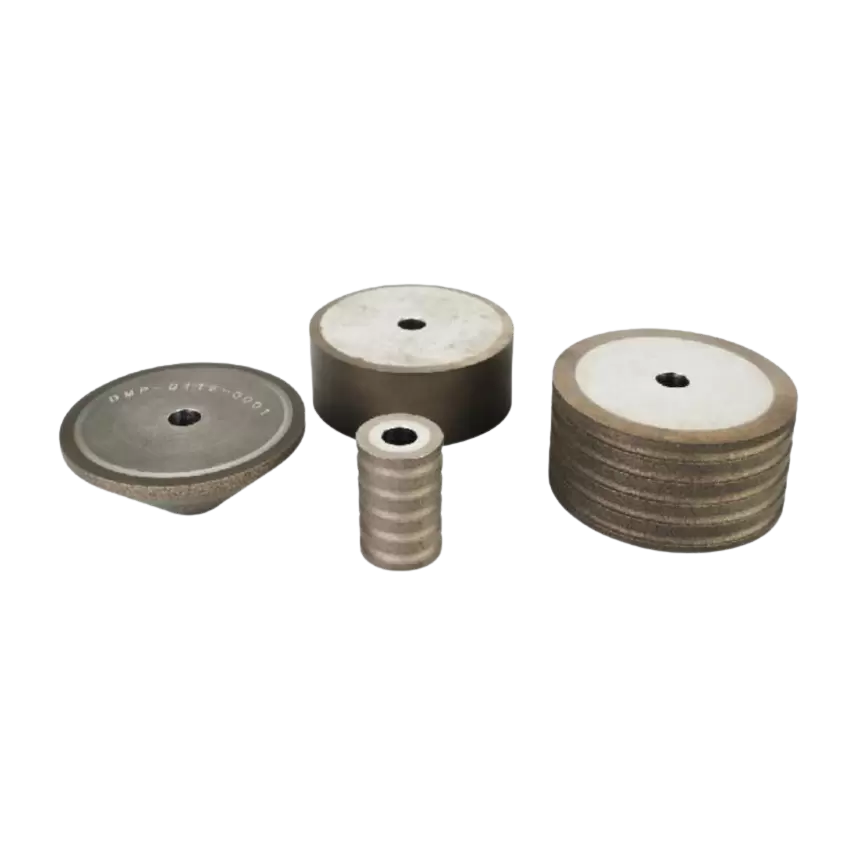
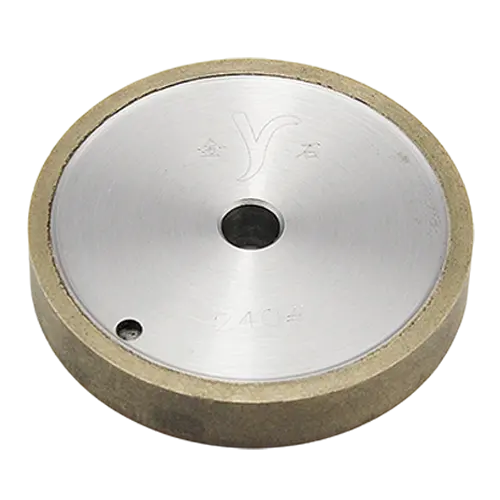
A suitable CNC diamond wheel should combine abrasive performance with dimensional and equipment compatibility. Meijie's CNC Diamond Wheel is developed for CNC machining centers and glass edging equipment from different brands, using high-purity diamond as the core abrasive and bonding systems including bronze alloy.
The product is designed to balance sharpness and wear resistance, supporting efficient material removal while maintaining the working shape of the wheel. Its stated service life exceeds 20,000 meters, and repeated use can reduce wheel replacement frequency and associated consumable costs.
The wheel is available with outer diameters from 80–200 mm, inner diameters of 12 mm or 22 mm, and grit sizes from 80#–400#. It is designed for glass with thicknesses ranging from 2–18 mm, providing a broad operating range for different CNC glass processing requirements.
For equipment-specific details and available configurations, see the CNC diamond wheel product page.
High-speed four-side processing introduces additional requirements related to wheel balance, grinding stability, and machine compatibility. For these applications, a high-speed four-side grinding wheel can be considered when the production system uses dedicated four-side grinding equipment.
This type of wheel uses diamond abrasive combined with an optimized bonding system and undergoes dynamic balancing treatment for high-speed operation. Its design focuses on stable grinding force, wear resistance, and reduced glass breakage. Available specifications include a 160 mm outer diameter, optional 12 mm, 22 mm, and 50 mm inner diameters, and grit grades from 180#–320#. It supports multiple glass thickness specifications, including P10, P12, P20, P25, and P30.
The distinction between these wheel types is important during product selection. A general CNC diamond wheel is intended for CNC machining centers and glass edging equipment, while a high-speed four-side grinding wheel is more specifically associated with four-side grinding applications. Selecting between them should be based on the actual machine configuration and processing method.
CNC glass edge processing requires a grinding wheel that can maintain controlled cutting performance throughout the production cycle. Sharpness, wear resistance, low chipping, dimensional stability, heat control, and stable high-speed operation all contribute to the final processing result.
Wheel selection should also extend beyond abrasive characteristics. Outer diameter, mounting dimensions, grit size, wheel profile, operating speed, glass thickness, and machine compatibility need to be evaluated together. A wheel that satisfies the dimensional requirements but does not match the spindle speed or edge profile may still produce inconsistent results.
For manufacturers using CNC machining centers, the most reliable selection process begins with the actual production conditions: machine configuration, glass specification, edge geometry, material removal requirements, target edge quality, and expected production volume. Matching these conditions with an appropriately designed grinding wheel provides a stronger basis for stable processing, longer wheel life, and predictable manufacturing performance.