
Aug 13,2026
How to Choose the Right Diamond Grit Size for Glass Grinding
A grinding head is an abrasive machining tool used to remove material from a workpiece, refine its surface, or produce specific geometric features. Depending on its design, it can be used for edge finishing, internal hole grinding, groove machining, and precision contour processing. Grinding heads are particularly useful when a component has small features, complex geometries, or demanding dimensional requirements.
The term grinding head covers different tool designs across industrial applications. Abrasive material, working-end geometry, tool dimensions, and machine compatibility all influence how a grinding head performs. Understanding these factors helps manufacturers select a tool suited to the workpiece material and machining task, especially when processing optical components and advanced ceramics.
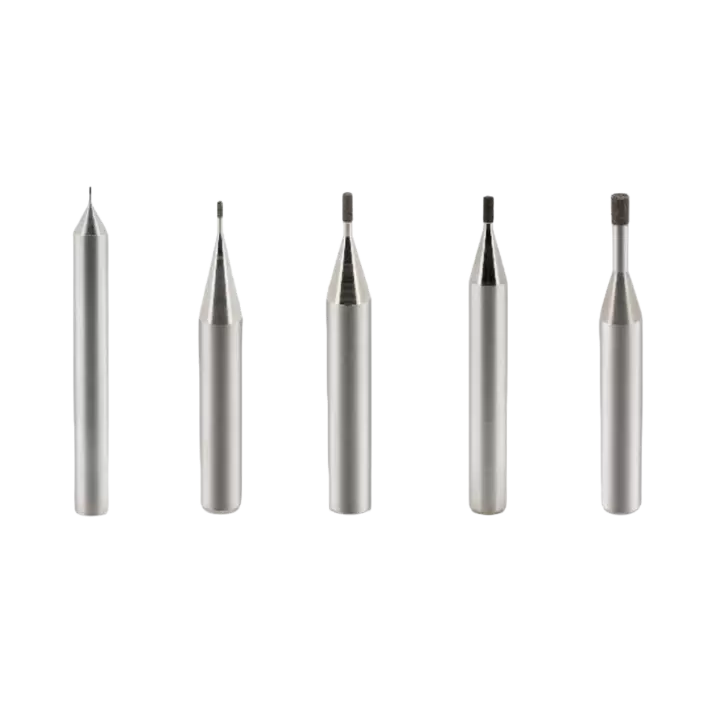
A grinding head is the working part of an abrasive tool assembly that contacts a workpiece and removes material through the action of abrasive grains. It is commonly mounted on a machine spindle or tool holder, which supplies the rotation and positioning required for machining. The exact structure varies with the equipment and the intended operation.
During grinding, abrasive grains interact with the workpiece surface. Individual grains remove small amounts of material through cutting, plowing, and localized deformation or fracture. The combined action of many abrasive grains gradually changes the workpiece's dimensions, surface condition, or profile.
Grinding heads are used in applications where the machining task requires a particular tool shape or a relatively small working area. A compact grinding head, for example, may reach an internal feature that is difficult to machine with a larger wheel. The appropriate design depends on the geometry to be produced, the material being processed, and the required surface quality.
The term should not be treated as interchangeable with every grinding wheel or grinding disc. A grinding wheel generally refers to an abrasive tool with a defined wheel geometry, while a grinding head may describe a smaller working tool or a specialized tool assembly. Terminology varies between industries and equipment manufacturers, so the actual tool structure is important when comparing products.
The construction of a grinding head depends on its application, but many designs combine a mounting section with an abrasive working section. In bonded abrasive tools, the abrasive grains are held together or attached to the tool through a bonding system. Other designs may use different methods of retaining the abrasive material.
The main components or design features commonly considered include:
Shank or mounting section: Connects the tool to the machine spindle or holder. Its diameter, length, and interface must match the equipment.
Abrasive working section: The part that contacts the workpiece. Its diameter, length, shape, and abrasive distribution determine which areas can be reached and how material is removed.
Abrasive grains and bonding structure: The abrasive performs the material-removal work, while the bonding system, where used, retains the grains and influences their exposure and wear behavior.
These features work together rather than independently. A suitable abrasive cannot compensate for an incorrectly sized shank or a working section that cannot reach the required feature. Likewise, a geometrically suitable tool may still produce unsatisfactory results if its abrasive characteristics do not match the workpiece or machining conditions.
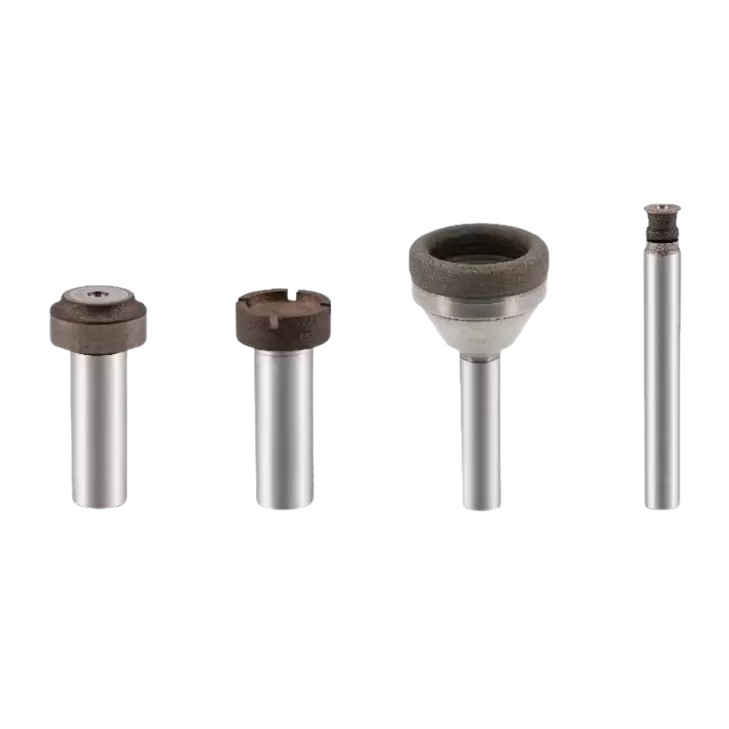
Grinding heads can be classified according to abrasive material, working-end geometry, and intended machining operation. These categories overlap: a diamond grinding head may have a cylindrical working end, for example, and be designed specifically for internal hole grinding.
Based on abrasive material, several common types serve different machining requirements:
Diamond Grinding Heads: Use diamond abrasive grains and are widely used for suitable hard and brittle materials, including many engineering ceramics, glass, and optical materials. The correct design depends on the workpiece, bonding system, and operating conditions.
CBN Grinding Heads: Use cubic boron nitride abrasive. CBN is commonly selected for grinding hardened ferrous materials because diamond can wear rapidly in many iron-based machining applications.
Conventional Abrasive Grinding Heads: May use abrasives such as aluminum oxide or silicon carbide. Their suitability depends on the material, required finish, and tool design.
Grinding heads also vary in working-end shape. Cylindrical designs can suit certain internal or straight-feature operations, while conical or rounded profiles may provide access to angled surfaces, corners, or curved features. These are general examples rather than universal rules; the geometry must match the actual machining task.
A further distinction is the operation for which the tool is designed. Some grinding heads are intended for internal hole finishing, while others are developed for grooves, threads, edges, or defined contours. Choosing a tool by name alone is not enough. Its working dimensions, abrasive properties, and compatibility with the machine should be checked against the required operation.
The material being machined is one of the main factors in grinding head selection. Hardness matters, but it is not the only consideration. Brittleness, microstructure, thermal sensitivity, surface-quality requirements, and the geometry of the component can also affect the machining process.
Diamond grinding heads are used for many hard and brittle materials because diamond has high hardness and wear resistance. However, the suitability of a particular diamond tool depends on the workpiece material and operating conditions. Diamond is not the preferred abrasive for every metal, particularly many iron-based materials, where chemical interactions can accelerate tool wear.
Common application materials include:
Optical materials: Depending on the tool design, precision grinding heads may process quartz, glass-ceramics, and sapphire components that require controlled contours and surface finish.
Engineering ceramics: Materials such as alumina, zirconia, silicon carbide, and silicon nitride can require abrasive tools designed for their hardness, brittleness, and machining characteristics.
Other hard or brittle materials: The appropriate grinding head depends on the material composition, the feature being machined, and the quality requirements of the finished part.
Material compatibility should always be confirmed for the specific tool. Two workpieces may both be classified as ceramics but respond differently to grinding because their mechanical properties and microstructures differ. Tool geometry, abrasive selection, and machining parameters must therefore be considered together.
Grinding heads support a range of machining operations, particularly where a tool must reach a defined feature or remove material from a localized area. The following applications illustrate how tool geometry and workpiece requirements influence their use.
Surface and Edge Grinding: Suitable grinding heads can refine edges, shape contours, and remove material from selected surfaces. In glass and optical component processing, edge quality and dimensional consistency may be important acceptance criteria.
Internal Hole Grinding and Reaming: Small-diameter tools can be used for internal hole finishing and related operations when their diameter and effective length match the feature. The required hole geometry and tolerance determine the appropriate approach.
Groove, Thread, and Profile Machining: Specialized grinding heads can produce grooves, threads, curved edges, and other defined features. The tool must provide adequate access without interfering with adjacent surfaces.
Precision Optical Component Processing: Grinding heads designed for optical applications can be used on components made from materials such as quartz, glass-ceramics, and sapphire. Tool selection depends on the required contour accuracy and surface finish.
Semiconductor Ceramic Machining: Suitable tools can support operations such as platform milling, arc-edge grinding, internal grinding, and groove machining. Dedicated small-diameter grinding heads may also be used for hole machining in compatible ceramic components.
For example, Meijie's precision optics grinding head is intended for optical components with demanding contour and surface-finish requirements. The company's semiconductor ceramic grinding head covers multiple ceramic machining operations, while its semiconductor ceramic hole machining grinding head is designed for operations including peck drilling, hole grinding, and reaming. These products illustrate why the machining feature should guide tool selection rather than relying on a general tool category alone.
A grinding head removes material through the interaction between its abrasive grains and the workpiece. As the tool rotates or moves along the programmed path, exposed abrasive grains engage the surface. Each grain removes a small amount of material, and the combined action produces the intended geometry or surface condition.
The result depends on the relationship between the abrasive, the tool geometry, and the machining conditions. If the abrasive grains are unsuitable for the workpiece, material removal may be inefficient or the tool may wear too quickly. If the tool cannot reach the target feature properly, it may fail to produce the required dimensions even when its abrasive properties are appropriate.
Heat and chip removal are also important. Grinding generates heat at the contact zone, while removed material must be cleared from the working area. Depending on the process, insufficient cooling or poor chip evacuation can contribute to surface defects, unstable machining, or accelerated tool wear. The cooling method and operating parameters should therefore follow the tool manufacturer's guidance and the requirements of the machine and workpiece.
Grinding head performance is influenced by several connected factors. Evaluating them together is more useful than selecting a tool based on one specification alone.
| Factor | Why It Matters |
|---|---|
| Abrasive type and grit size | Influence material-removal behavior, wear, and the surface condition that can be achieved. |
| Working-end geometry and dimensions | Determine access to the feature, contact conditions, and compatibility with the workpiece geometry. |
| Rotation speed and feed rate | Affect the interaction between the abrasive and workpiece and must remain within suitable operating limits. |
| Cooling and chip removal | Help manage heat and clear removed material from the machining zone. |
| Machine rigidity and tool mounting | Influence tool stability, vibration, and the consistency of machining results. |
Grit size is one factor in balancing material removal and surface finish. Coarser abrasive grades are often used when greater material removal is needed, while finer grades may be selected for finishing operations. However, grit size alone does not determine the final surface quality. Bond characteristics, abrasive concentration, tool condition, machine behavior, and machining parameters also contribute.
Rotation speed and feed rate must be selected for the particular grinding head and operation. A setting suitable for one tool diameter or workpiece material may not be appropriate for another. Manufacturers should verify the permitted speed range, mounting requirements, and recommended process conditions rather than applying a single set of parameters to every grinding head.
Cooling and chip evacuation are especially relevant when heat accumulation or debris can affect the finished component. The appropriate method depends on the tool, workpiece, and equipment configuration. Stable mounting and suitable machine rigidity also help limit vibration and support repeatable results.
Choosing the right grinding head begins with defining the machining task. The objective may be to finish an internal hole, produce a groove, refine an optical contour, or machine a feature in a ceramic component. Each operation imposes different requirements on tool geometry, abrasive properties, and machine access.
Workpiece material should be assessed first. The abrasive and tool construction must suit the material's hardness, brittleness, and other relevant properties. A tool designed for one material should not automatically be assumed suitable for another, even if their machining operations appear similar.
The next consideration is feature geometry and tool dimensions. The grinding head diameter, shank diameter, and effective length must suit the target feature and the machine's tool holder. The working section must reach the machining area while maintaining adequate clearance from surrounding surfaces. For internal holes, for example, both the hole diameter and the required machining depth influence the tool dimensions.
Equipment compatibility and process requirements also need to be checked. Rotation speed, feed rate, grinding depth, cooling arrangements, and mounting conditions must be suitable for the selected tool. The required dimensional tolerance, contour accuracy, and surface finish should be defined before choosing a tool, because these requirements can affect abrasive grade and machining strategy.
Before confirming a selection, manufacturers should verify the following points:
The abrasive and tool design are suitable for the workpiece material.
The head diameter, shank diameter, and effective length match the machining feature and equipment.
The operating conditions are within the tool's specified limits.
The tool can meet the required dimensional accuracy and surface-quality targets under the intended process conditions.
No single grinding head is ideal for every operation. A suitable choice balances tool access, material compatibility, machining performance, and the quality requirements of the finished component.
The requirements of precision optical processing differ from those of semiconductor ceramic machining. Optical components may require accurate contours and controlled surface finish, while ceramic components used in semiconductor equipment can involve internal holes, grooves, curved edges, and other defined features. These differences influence the tool design and machining approach.
For optical components, the grinding head must be appropriate for the material and the required geometry. Meijie's precision optics grinding head is intended for applications involving quartz hemispheres, glass-ceramics, and sapphire cover plates. Its product information specifies geometric tolerance below 0.01 mm and surface finish below Ra 0.5 μm for the stated application requirements. Actual results depend on the machining process and conditions.
For semiconductor ceramic components, the required tool depends on the feature being produced. Meijie's semiconductor ceramic grinding head is intended for materials including alumina, zirconia, silicon carbide, and silicon nitride, with applications such as platform milling, arc-edge grinding, thread grinding, internal hole grinding, and groove broaching. These operations require a tool design compatible with the geometry and material of the component.
Small internal features can call for a more specialized design. The semiconductor ceramic hole machining grinding head has a listed head diameter range of 0.5–5 mm and an effective length of 2–20 mm. It is intended for operations such as peck drilling, hole grinding, reaming, and groove broaching in suitable ceramic components. These dimensions are product specifications, not universal requirements for ceramic hole machining.
Comparing these applications shows why selection should begin with the workpiece and machining feature. The material, geometry, tolerance, machine setup, and operating limits all need to be considered before choosing a grinding head.
The terms can vary by industry and manufacturer. A grinding wheel usually refers to an abrasive wheel with a defined geometry, while a grinding head often describes a smaller or specialized working tool used for specific features. The actual structure and intended operation are more reliable comparison points than the name alone.
Grit size influences how abrasive grains interact with the workpiece. Coarser grades are often associated with greater material removal, while finer grades are commonly used for finishing. The final result also depends on the abrasive type, bonding system, tool geometry, and machining conditions.
Some tools can be used across more than one material, but compatibility should be verified for the specific workpieces and operating conditions. Differences in hardness, brittleness, and microstructure can affect tool wear and machining quality. A tool suitable for one ceramic or optical material should not automatically be assumed suitable for all others.
Start with the geometry of the feature and the machine interface. The head diameter must suit the area being machined, while the shank diameter must match the tool holder. Effective length must provide the required reach and clearance. These dimensions should then be checked against the tool's operating limits and the process requirements.
A grinding head is a specialized abrasive tool whose performance depends on the relationship between its abrasive material, working-end geometry, dimensions, and operating conditions. Different designs support different operations, from edge and contour grinding to internal hole and groove machining.
Selecting the right grinding head requires more than matching a product name to an application. Workpiece material, feature geometry, machine compatibility, cooling, and required accuracy all influence the decision. By assessing these factors together, manufacturers can choose a tool suited to the machining task and establish process conditions that support consistent component quality.