
Aug 20,2026
How to Extend the Service Life of Glass Grinding Wheels
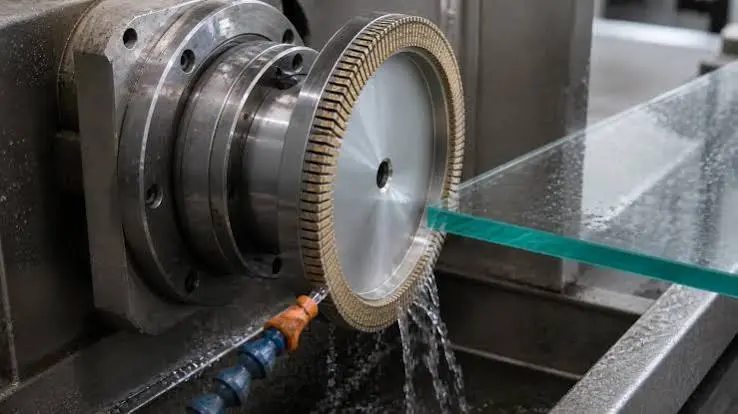
Glass edge grinding is an important step in the production of architectural glass, photovoltaic glass, appliance glass, automotive glass, display components, and other precision glass products. The grinding method has a direct influence on processing throughput, edge quality, production consistency, and the operating requirements of the equipment. For manufacturers evaluating different glass grinding wheels, the choice between four-sided grinding and conventional grinding is therefore a process decision rather than simply a wheel selection issue.
Four-sided glass grinding is designed around equipment that can process multiple edges within an integrated grinding operation. This configuration is particularly suitable for production lines where glass panels are repeatedly processed to defined dimensions and edge requirements. By comparison, conventional glass grinding covers a broader range of machine configurations and individual grinding operations, giving manufacturers greater flexibility when production volumes, glass specifications, or equipment conditions vary frequently.
The difference becomes more important as production requirements increase. A small-batch processor with frequently changing glass dimensions may prioritize equipment flexibility and easy process adjustment, while a high-volume manufacturer may place greater emphasis on throughput, automated handling, high-speed operation, and consistent edge quality. Neither grinding method is universally better; the appropriate solution depends on the relationship between the workpiece, machine, grinding wheel, and production target.
When comparing a four-sided grinding wheel with a conventional grinding wheel, manufacturers should therefore evaluate more than abrasive performance. Processing method, machine compatibility, production volume, glass thickness, edge requirements, grinding speed, wheel stability, and total operating cost all influence the final decision.
The most useful way to compare the two approaches is to evaluate how each performs under actual production conditions.
| Comparison Factor | Four-Sided Grinding | Conventional Grinding |
|---|---|---|
| Processing method | Multiple edges can be processed within an integrated production flow | Processing is generally based on conventional or individual grinding operations |
| Production efficiency | Well suited to high-throughput production | Suitable for flexible or smaller-volume production |
| Edge consistency | Strong consistency when equipment and wheels are properly matched | Depends more heavily on individual machine and process conditions |
| Machine requirements | Requires compatible four-side grinding equipment | Works with a wider range of conventional equipment |
| High-speed operation | Well suited to high-speed glass grinding | Depends on machine, wheel design, and operating conditions |
| Product flexibility | Most effective for repetitive and standardized production | Generally more flexible when product specifications change frequently |
| Initial investment | May require dedicated equipment and higher initial investment | Existing equipment can often be retained |
| Typical application | Automated, high-volume, repetitive glass processing | Small-batch, flexible, or mixed-specification production |
The first major difference is the way the grinding operation is organized. Four-sided systems are designed to handle multiple edges as part of a coordinated process. This can reduce unnecessary handling and create a more continuous production flow. Conventional grinding may require more individual processing steps depending on the machine configuration and edge requirements.
The second difference concerns production stability. When the same glass dimensions and edge specifications are processed repeatedly, a four-sided system can provide a highly consistent working environment. Once the machine, grinding wheel, and processing conditions have been properly matched, the process can be maintained over extended production runs.
Conventional grinding remains valuable where flexibility is the priority. Manufacturers handling different glass sizes, small batches, prototypes, or frequently changing specifications may not benefit enough from a dedicated four-sided system to justify the additional equipment requirements. In such cases, a conventional setup can provide a more practical balance between investment and production flexibility.
Production throughput is one of the clearest reasons manufacturers consider four-sided grinding. In high-volume glass processing, every additional handling step can affect output. Moving a glass panel between different grinding operations consumes time and can also introduce opportunities for positioning errors or process variation.
A four-sided grinding system is designed to integrate edge processing into a more continuous operation. This makes it particularly appropriate for production environments where large numbers of similar glass panels must be processed every day. When the machine is running at an appropriate speed and the grinding wheels remain stable, the production line can maintain a predictable processing rhythm.
High-speed operation, however, places greater demands on the grinding wheel. A wheel used on a high-speed four-sided machine must maintain adequate sharpness while resisting wear and dimensional changes. Excessive wheel wear can alter the effective grinding profile, increase the need for adjustment, and eventually affect edge quality.
For this reason, high-speed glass grinding should not be evaluated solely by spindle or line speed. The actual production benefit depends on whether the grinding wheel can maintain effective material removal and stable geometry throughout the production cycle.
Conventional grinding can still provide competitive efficiency in applications with lower production volumes. If a manufacturer does not require continuous four-edge processing, the investment in a dedicated four-sided system may not produce a sufficient return. A conventional machine with a properly matched glass grinding wheel can remain an efficient option for smaller or more varied production schedules.
The practical question is therefore not simply which method has a higher theoretical speed. It is which method can maintain the required throughput while meeting the manufacturer's quality standards and operating constraints.
Processing speed has little value if the resulting glass edges require excessive rework. Edge integrity is a major concern in glass processing because excessive chipping, uneven grinding, or dimensional variation can reduce the qualified rate and increase downstream processing costs.
A suitable four-sided grinding wheel for glass should provide sufficient sharpness for efficient material removal while maintaining stable abrasive exposure during operation. The bonding system also affects how effectively abrasive grains are retained and renewed during grinding.
For high-speed four-sided processing, dynamic balance is another important consideration. An imbalance in a wheel rotating at high speed can produce uneven grinding forces and vibration. These effects may appear as inconsistent edge quality, dimensional deviations, or accelerated wear. Proper wheel balancing and appropriate machine installation are therefore essential parts of stable four-sided grinding.
Chipping control is influenced by several variables rather than the grinding wheel alone. Glass composition, thickness, wheel specification, machine condition, feed rate, grinding depth, cooling, and wheel wear can all affect the finished edge. A wheel with good abrasive performance cannot compensate indefinitely for unsuitable processing conditions.
This is also why it would be inaccurate to claim that four-sided grinding automatically produces better edges than conventional grinding. When the equipment is properly configured, four-sided processing can provide strong consistency and stable production, but the final glass edge quality still depends on the complete grinding system.
For manufacturers comparing the two methods, the more useful evaluation is whether the selected process can repeatedly meet the required edge specification without excessive wheel adjustment, machine intervention, or product rejection.
Although machine configuration determines much of the difference between the two grinding methods, the grinding wheel remains a critical component of the process. A wheel must be selected according to the equipment, glass specification, processing speed, and required finish rather than according to abrasive type alone.
Several wheel characteristics are particularly important in four-sided applications:
In conventional glass grinding, the priorities can be somewhat different. A manufacturer processing multiple glass specifications may place greater emphasis on wheel versatility and compatibility with existing machines. Wheel dimensions, abrasive grit, bond characteristics, and profile can be selected according to the specific operation.
The distinction is not that four-sided grinding requires a completely different principle of abrasive performance. Rather, the operating environment creates different priorities. High-speed, continuous four-sided processing places greater emphasis on maintaining wheel stability and performance over sustained production runs, while conventional grinding may place more emphasis on flexibility across different processing requirements.
The strongest application for four-sided glass grinding is a production environment where the same or similar glass products are processed repeatedly and production volume is high. The greater the degree of standardization, the more valuable an integrated grinding process can become.
Four-sided grinding is particularly suitable for:
Photovoltaic glass, appliance glass, and other large-scale glass processing applications can benefit when production requires consistent edge processing across large numbers of panels. The exact suitability still depends on glass dimensions, thickness, machine configuration, and required edge geometry.
Conventional grinding may be a better choice when production conditions are less standardized. Small-batch production, frequent changes in glass dimensions, prototype processing, or operations built around existing conventional equipment can make flexibility more valuable than maximum throughput.
Manufacturers should also consider future production plans. A conventional system may be sufficient at the current production volume but become a limitation if demand increases substantially. Conversely, investing in a dedicated four-sided system for a low-volume operation can create unnecessary capital and maintenance costs.
The decision should therefore be based on expected production conditions over the useful life of the equipment rather than on the current order volume alone.
Selecting between the two approaches requires a broader evaluation of the production line. The grinding wheel is only one part of the system, and its performance depends heavily on the machine and workpiece.
| Production Condition | Recommended Direction |
|---|---|
| High production volume | Four-sided grinding |
| Repetitive glass specifications | Four-sided grinding |
| High-speed processing requirement | Four-sided grinding |
| Automated production line | Four-sided grinding |
| Small-batch production | Conventional grinding may be more practical |
| Frequent product changes | Conventional grinding may provide greater flexibility |
| Existing conventional equipment | Conventional grinding can reduce equipment investment |
| Mixed glass specifications | Evaluate machine and wheel compatibility before selecting the process |
For high-volume production with standardized glass dimensions, four-sided grinding is generally the stronger candidate. Its value comes from the combined effect of integrated processing, production continuity, and stable high-speed operation. The benefit becomes more apparent when the production line operates for long periods with limited changes in product specifications.
For small-batch production, conventional grinding can provide a more practical solution. Manufacturers may already have suitable equipment, and the ability to adapt the grinding process to different glass sizes can outweigh the throughput advantage of a dedicated four-sided system.
Machine compatibility should be examined before purchasing a wheel. The wheel's outer diameter, inner diameter, mounting configuration, operating speed, abrasive specification, and profile must correspond to the equipment. A technically advanced grinding wheel cannot deliver its expected performance if its dimensions or operating requirements do not match the machine.
Total operating cost should also be considered. Wheel price is only one component. Replacement frequency, downtime, production speed, qualified-product rate, machine adjustment, and labor requirements can all influence the actual cost per processed meter or glass panel.
This is particularly important when comparing four-sided grinding vs conventional glass grinding. A four-sided system may require greater initial investment, but higher throughput and reduced handling can improve production economics over time. A conventional system may have lower initial costs and remain the better choice where production volume does not justify a dedicated line.
For manufacturers using four-side grinding equipment, wheel selection should focus on maintaining sharpness, wear resistance, dimensional stability, and reliable performance during continuous operation.
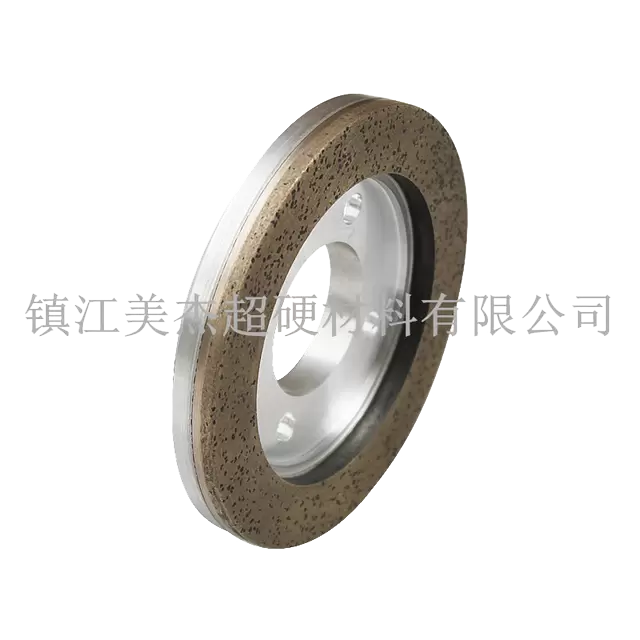
Meijie's High-Speed Four-Side Grinding Wheel is developed for four-side grinding machines and high-speed glass grinding applications. The wheel uses high-quality diamond abrasive together with optimized bonding technology, including bronze alloy-based bonding solutions, to balance cutting sharpness and wear resistance.
The wheel is designed to address several common requirements in high-speed glass processing. Its sharp grinding performance supports efficient material removal, while its wear resistance helps maintain useful performance during extended production. A low breakage rate is also important for manufacturers seeking to protect the qualified rate of finished glass products.
Dynamic balancing is another key feature for high-speed applications. A properly balanced wheel can help maintain stable grinding forces during high-speed operation and reduce deviations caused by vibration or uneven rotation. This is especially relevant when the production line is designed for continuous, high-throughput processing.
The available specifications are:
| Parameter | Specification |
|---|---|
| Outer Diameter | 160 mm |
| Inner Diameter | 12 / 22 / 50 mm |
| Supported Glass Thickness | P10 / P12 / P20 / P25 / P30 |
| Grit | 180#–320# |
The available grit range and mounting specifications provide options for different four-side grinding equipment configurations. However, manufacturers should still confirm the machine model, glass specification, required edge result, and operating conditions before final wheel selection.
For production lines where high-speed operation and consistent edge grinding are important, the wheel should be evaluated as part of the complete machine-process combination rather than as an isolated consumable.
There is no single grinding method that suits every glass processing operation. Four-sided grinding has clear advantages when production requires high throughput, repetitive processing, automation, and stable high-speed operation. Its value is strongest when the production line handles standardized glass products at a scale large enough to justify dedicated equipment.
Conventional glass grinding remains an effective solution when flexibility, lower initial investment, existing equipment, or frequent specification changes are more important. It can be particularly practical for small-batch production and mixed-product environments.
The final decision should be based on production volume, glass dimensions and thickness, edge requirements, machine configuration, processing speed, wheel performance, maintenance requirements, and total operating cost. A grinding wheel should then be selected according to those conditions so that abrasive performance and equipment capability work together.
For manufacturers operating four-side grinding equipment, a dedicated high-speed four-sided grinding wheel can provide the sharpness, wear resistance, and dynamic stability required for demanding glass processing. The right solution is ultimately the one that delivers the required edge quality and production efficiency consistently under the actual conditions of the manufacturing line.