
Sep 03,2026
CNC Glass Edge Processing: Grinding Wheel Requirements for Machining Centers
Semiconductor equipment relies on ceramic components for applications that require hardness, chemical resistance, thermal stability, and dimensional consistency. Materials such as alumina, zirconia, yttria, silicon carbide, and silicon nitride are used in components including ceramic window covers, focus rings, nozzles, gas distribution components, pump rings, and ceramic bases.
The machining of these components is not straightforward. Their hardness and brittle behavior make conventional material removal difficult, particularly when the component contains thin edges, small holes, grooves, threads, or curved profiles. Diamond grinding tools provide controlled abrasive cutting for these applications, helping manufacturers achieve the required geometry, dimensional accuracy, and surface condition.
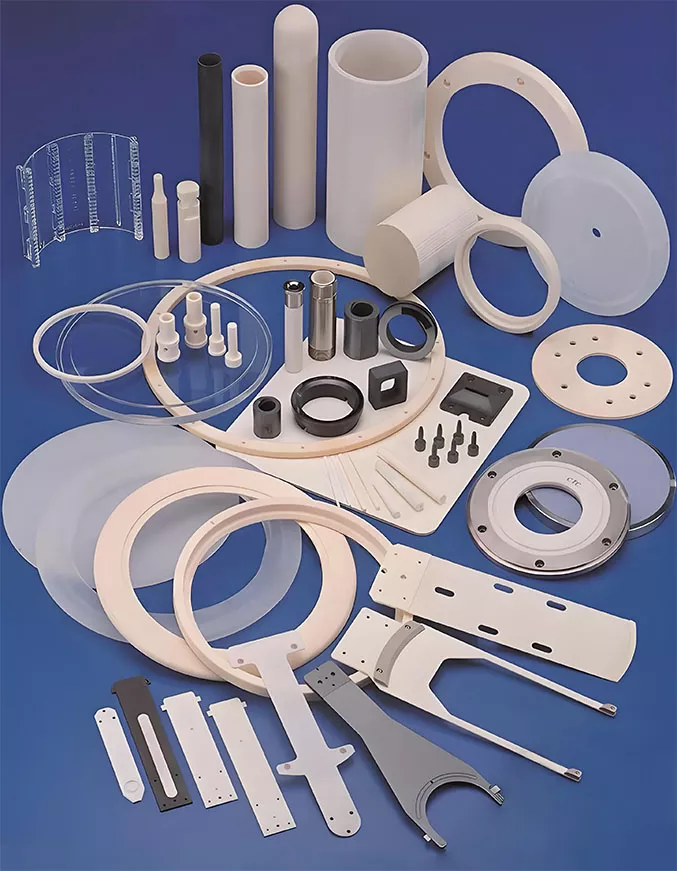
Semiconductor ceramic components often have relatively demanding machining requirements. The material may be hard enough to cause rapid tool wear, while its brittle nature can increase the risk of chipping or cracking if excessive force is applied.
Grinding is therefore used where controlled material removal is more important than simply achieving a high removal rate. A suitable abrasive tool can gradually remove material from the ceramic while maintaining the geometry required by the component.
Diamond is particularly relevant to this type of machining because of its high hardness and cutting capability. For hard ceramic materials, the abrasive needs to remain effective against the workpiece while maintaining a stable cutting action.
The tool itself also matters. Abrasive type alone does not determine machining performance. Grit size, tool geometry, working structure, rotational speed, feed rate, grinding depth, and equipment compatibility all affect the result.
For semiconductor components, this becomes especially important because many parts have functional surfaces or geometric features that cannot tolerate excessive chipping or dimensional variation. The objective is usually a controlled combination of material removal, surface quality, and dimensional accuracy.
The application of diamond grinding tools varies according to the geometry and function of the ceramic component. Some parts require surface or edge grinding, while others need precise holes, grooves, threads, or curved profiles.
| Semiconductor Ceramic Component | Typical Processing Requirement |
|---|---|
| Ceramic window covers and alumina domes | Surface, edge, arc, and dimensional control |
| Ceramic focus rings | Inner and outer geometry, edge quality, and surface control |
| Aluminum nitride nozzles | Precision hole machining and dimensional control |
| Gas distribution components | Hole and groove machining |
| Pump rings and ceramic bases | Inner hole, groove, surface, and dimensional machining |
Ceramic window covers and alumina domes can contain curved surfaces, edges, and other geometrical features that require controlled machining. The challenge is not only removing excess material but also maintaining the intended profile without unnecessary edge damage.
A diamond grinding head can be used for operations such as platform milling, arc edge grinding, or other profile-related work. The appropriate tool specification depends on the component geometry and the required dimensional and surface characteristics.
For these parts, stable cutting is important because local chipping along an edge or curved surface can affect the final component geometry. Grinding conditions should therefore be selected according to the ceramic material and the feature being processed.
Ceramic focus rings are another application where geometry and consistency matter. The ring may require controlled machining of its surfaces, edges, or internal features.
Because the component is defined by its circular geometry, dimensional consistency around the ring is important. Uneven material removal can affect the final shape and surface condition.
Grinding tools used for focus rings should therefore be matched to the required machining operation rather than selected only according to the material. Tool geometry and abrasive characteristics need to support the specific surface or edge being processed.
Aluminum nitride components can contain precision holes and other small geometric features. These applications place different demands on the grinding tool because the machining objective involves not only material removal but also hole size, position, geometry, and edge quality.
For this type of work, ceramic hole machining is particularly important. A suitable grinding head can be used for hole grinding, hole reaming, peck drilling, or related operations depending on the component and equipment.
Small holes require careful control because excessive force or an unsuitable tool can increase chipping at the hole entrance or exit. Tool diameter, effective length, abrasive grit, and operating conditions should therefore be considered together.
Pump rings, ceramic bases, and similar components may contain combinations of inner holes, grooves, platforms, or other machined features. A single component can therefore require several grinding operations.
The machining approach should follow the geometry of the component. Surface areas may require platform grinding, while internal features may require hole machining or other specialized operations.
This is one reason semiconductor ceramic processing often uses different grinding tools for different features rather than applying one general-purpose tool to every operation.
Different component geometries require different grinding operations. The choice is determined primarily by the feature that needs to be produced and the dimensional requirements of that feature.
Platform milling is used when a ceramic component requires a controlled flat or platform surface. The main considerations include material removal, surface condition, flatness, and dimensional accuracy.
Because ceramic materials can be brittle, the grinding action needs to remain stable throughout the operation. Excessive grinding force can result in edge chipping or other surface defects, particularly where the component has thin sections.
Arc edge grinding is used for curved edges or profiles. Ceramic window covers, domes, and other shaped components may require this type of machining.
The grinding tool needs to follow the intended geometry while removing material consistently along the edge. Tool geometry and processing conditions therefore have a direct effect on profile accuracy and edge quality.
Some ceramic components require threads or other defined geometric features. Thread grinding focuses on producing the required thread profile while controlling dimensional accuracy.
Because the feature geometry is relatively specific, the tool and machining conditions should be selected according to the thread design, ceramic material, and equipment.
Hole machining presents a different set of requirements from surface grinding. The tool must enter the ceramic material while controlling hole diameter, depth, geometry, and edge quality.
Depending on the application, operations may include peck drilling, hole grinding, hole reaming, and groove broaching. Small-diameter grinding heads are particularly relevant when the component contains precision holes.
The tool must also be compatible with the available equipment. A grinding head that is suitable in terms of abrasive performance may still be unsuitable if its diameter, shank, or effective length does not match the machining setup.
The value of a diamond grinding tool is not simply its ability to cut hard ceramic materials. For semiconductor components, its usefulness is measured by how well it supports the required machining result.
The main considerations include:
For demanding ceramic applications, these factors are closely connected. Increasing material removal without considering grinding force, for example, may affect surface quality. Similarly, choosing a very fine abrasive without considering the required removal rate may reduce processing efficiency.
The tool should therefore be evaluated according to the complete application rather than one performance characteristic.
Tool selection should begin with the component rather than the tool catalogue. The supplier needs to understand what material is being processed, which feature needs to be machined, and what dimensional and surface requirements apply.
The ceramic material is the first consideration. Alumina, zirconia, yttria, silicon carbide, silicon nitride, and aluminum nitride can have different machining characteristics. Hardness and brittleness affect abrasive selection, cutting force, and tool wear.
The next consideration is the machining operation. Platform milling, arc edge grinding, thread grinding, inner hole grinding, and hole reaming do not place identical requirements on the tool.
Component geometry is also important. A large flat surface, a curved edge, and a small-diameter hole require different tool geometries and operating conditions.
| Application | Main Consideration | Tool Direction |
|---|---|---|
| Platform or surface grinding | Surface and dimensional control | Grinding head |
| Arc edge grinding | Edge geometry and profile accuracy | Grinding head |
| Thread or groove machining | Feature geometry and dimensional control | Application-specific grinding head |
| Ceramic hole machining | Hole diameter, depth, and edge quality | Hole machining grinding head |
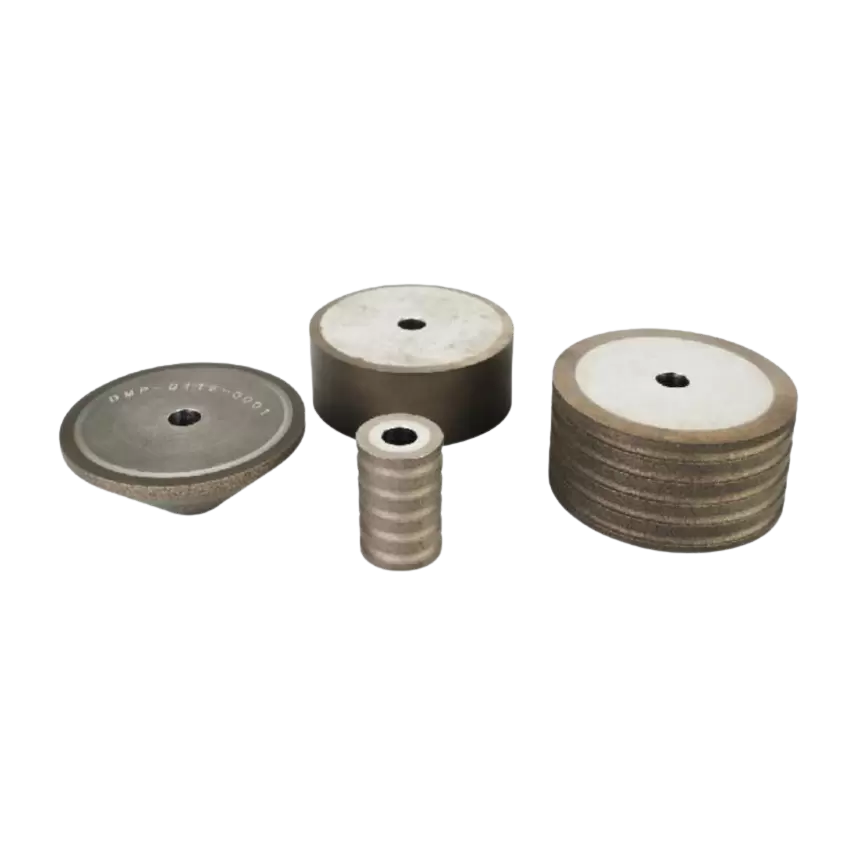
For general ceramic component machining, a grinding head for semiconductor ceramic components should be matched to the material and feature being processed. The GRINDING HEAD product range is relevant to applications involving ceramic materials such as alumina, zirconia, yttria, silicon carbide, and silicon nitride.
For precision holes, the tool requirements are more specific. A hole machining grinding head can be considered for operations involving hole grinding, hole reaming, peck drilling, and groove-related machining, provided its specification matches the component and equipment.
The important point is that the tool should not be selected solely because it is marketed for ceramic processing. Material, feature geometry, tool dimensions, abrasive grit, rotational speed, feed rate, and equipment requirements all need to be considered.
Once a suitable tool has been selected, processing conditions still determine the final result. The same grinding head can behave differently when the grinding depth, feed rate, or rotational speed changes.
The main factors to monitor include:
Grit selection should correspond to the machining stage and required surface condition. A more aggressive abrasive condition may be appropriate for material removal, while a finer grinding condition may be preferred where surface quality is more important.
Grinding speed and feed rate should also be considered together. Increasing feed rate without adjusting the other conditions can increase grinding force and affect edge quality. Similarly, excessive grinding depth can place additional load on both the tool and ceramic component.
Tool condition is another practical consideration. As a grinding tool wears, its cutting behavior can change. Monitoring the tool and maintaining suitable processing conditions can help reduce variation between components.
For precision ceramic parts, process control is therefore as important as the initial tool selection.
Hole machining deserves separate consideration because the available working space is limited and the geometric requirements can be strict.
A hole machining tool needs to enter the workpiece while maintaining sufficient cutting action around the hole. Tool diameter, shank diameter, effective length, grit size, and rotational conditions all affect the machining process.
For example, very small holes require a tool with a suitable diameter and sufficient rigidity for the application. Excessive tool deflection or unstable cutting can affect hole geometry and increase the risk of edge chipping.
Hole depth also matters. A deeper hole may require a different effective length and processing approach from a shallow hole. The tool must reach the required area without compromising stability.
The ceramic material should be considered at the same time. Aluminum nitride, alumina, zirconia, silicon carbide, and other ceramics do not necessarily respond identically to the same machining conditions.
For this reason, hole machining grinding heads should be selected based on the complete hole requirement rather than diameter alone.
A practical selection discussion with a grinding tool supplier should provide enough information to connect the tool specification with the actual application.
The most useful information includes the ceramic material, component geometry, machining operation, equipment, and quality requirements. If the application involves holes, the hole diameter, depth, and required geometry are also important.
Manufacturers should also distinguish between the requirements of the current operation and the final component requirement. A tool may be selected for material removal during an early machining stage, while another operation may be needed to achieve the final surface or dimensional condition.
For new applications, testing should focus on measurable results rather than relying only on the nominal tool specification. Material removal rate, dimensional accuracy, surface condition, edge quality, tool wear, and process stability provide a more useful basis for evaluating performance.
This approach also makes it easier to identify whether a standard grinding tool is sufficient or whether the application requires a more specific tool configuration.
Diamond grinding tools can be used for various hard ceramic materials used in semiconductor equipment, including alumina, zirconia, yttria, silicon carbide, silicon nitride, and aluminum nitride. The appropriate tool specification depends on the material and machining operation.
Components such as ceramic window covers, alumina domes, ceramic focus rings, aluminum nitride nozzles, gas distribution components, pump rings, and ceramic bases can require grinding or hole machining. The exact operation depends on the component geometry and functional requirements.
Hole machining grinding heads can be used for operations such as peck drilling, hole grinding, hole reaming, and groove broaching. Tool diameter, effective length, grit size, and equipment compatibility should be matched to the required hole geometry and ceramic material.
Diamond has high hardness and strong cutting capability, making it suitable for abrasive processing of hard ceramic materials. In semiconductor applications, the objective is not simply to remove material but to maintain controlled cutting, dimensional accuracy, and acceptable surface and edge quality.
Semiconductor ceramic components can require precise machining of surfaces, edges, curves, threads, grooves, and holes. Their hardness and brittle behavior make tool selection and process control important, particularly where dimensional accuracy and edge quality are required.
Diamond grinding tools provide a practical solution for these applications, but the tool should be selected according to the ceramic material, machining operation, component geometry, equipment, and required quality. A grinding head suitable for platform or arc edge grinding, for example, should not automatically be assumed to be suitable for precision hole machining.
A clear relationship between material, application, tool specification, and processing conditions provides the most reliable basis for stable semiconductor ceramic component grinding.