
Aug 13,2026
How to Choose the Right Diamond Grit Size for Glass Grinding
Selecting a grinding wheel for semiconductor wafer processing requires more than checking wheel dimensions or abrasive type. The right choice depends on the wafer material, grinding stage, material removal requirements, surface quality, and compatibility with the grinding equipment.
Silicon and SiC wafers can place different demands on a semiconductor wafer grinding wheel, while coarse grinding and fine grinding also require different cutting characteristics. A suitable grinding wheel should therefore be selected as part of the complete semiconductor wafer processing system rather than as an isolated component.
A wafer grinding wheel needs to match both the workpiece and the process. Before selecting a specific specification, manufacturers should identify the material being processed, the purpose of the grinding operation, the amount of material to be removed, and the required surface condition.
The main factors can be summarized as follows:
| Selection Factor | Main Question |
|---|---|
| Wafer material | Is the workpiece silicon, SiC, or another semiconductor material? |
| Grinding stage | Is the tool required for coarse or fine grinding? |
| Material removal | How much material needs to be removed during the operation? |
| Surface requirement | What level of surface roughness and damage control is required? |
| Equipment compatibility | Do the wheel dimensions and operating conditions match the grinding equipment? |
These factors are closely connected. For example, a wheel selected for high material removal may not provide the same results in a fine grinding operation where surface quality and thickness control are more important.
For this reason, wafer grinding wheel selection should start with the actual processing requirement and then move toward abrasive, grit size, wheel structure, and dimensional specifications.
The wafer material is one of the first considerations because different materials respond differently to abrasive action. Silicon and silicon carbide are both used in semiconductor applications, but their grinding behavior is not identical.
Silicon wafers require controlled material removal and stable surface quality throughout the grinding process. The appropriate wheel depends on whether the operation is intended for substantial thickness reduction or a more controlled finishing stage.
During silicon wafer grinding, the wheel must provide sufficient cutting ability without creating unnecessary grinding force or surface defects. The required grit size and wheel structure can therefore vary according to the grinding stage.
For applications involving wafer thinning, the selection should also consider the amount of material to be removed and the dimensional accuracy required after grinding. A wheel that performs effectively during a material-removal stage may not be the most appropriate choice for a finishing operation.
SiC wafer grinding presents a different set of challenges. Silicon carbide has high hardness and brittle material behavior, making material removal more demanding than conventional silicon grinding. Tool wear, grinding force, heat, and surface damage therefore require closer control.
The selection of a suitable silicon carbide wafer grinding tool should take into account the hardness of the workpiece and the required balance between cutting efficiency and surface quality. Diamond abrasive is commonly considered for demanding semiconductor grinding applications because of its suitability for hard materials.
The relationship between material properties and process conditions is discussed in more detail in SiC wafer grinding, particularly where hardness, brittleness, tool wear, and grinding conditions affect processing results.
The key point is that the wheel should be selected according to the material rather than assuming that one specification will produce the same performance across different wafer types.
The purpose of the grinding stage has a direct effect on the required wheel characteristics. In semiconductor wafer processing, coarse grinding and fine grinding have different priorities, so wheel selection should reflect the role of each stage.
Coarse grinding is generally associated with higher material removal. The grinding wheel needs to maintain effective cutting action while handling the required grinding load.
At this stage, material removal efficiency is an important consideration. Grinding depth, feed rate, abrasive characteristics, and wheel structure all influence how efficiently material can be removed from the wafer.
However, higher removal rates should not be treated as the only objective. Excessive grinding force or heat can affect wafer quality and may create additional work for subsequent processing stages. The wheel therefore needs to provide a practical balance between removal efficiency and process stability.
Fine grinding places greater emphasis on surface quality, thickness control, and consistent material removal. The objective is not simply to remove more material, but to achieve the required wafer condition with controlled grinding action.
Fine grinding may require a different abrasive grit and wheel structure from those used for coarse grinding. The appropriate selection depends on the target surface quality, wafer material, and process parameters.
For a detailed comparison of the two grinding stages, see coarse and fine grinding. In the context of wheel selection, the important point is that the tool should be matched to the specific stage rather than selected only according to wafer size.
Diamond grit size has a direct influence on cutting behavior, material removal, and surface condition. In general, larger abrasive particles can support more aggressive material removal, while finer particles are more commonly associated with controlled grinding and improved surface finish.
The correct grit size cannot be selected independently of the process. Manufacturers should consider:
For example, selecting an unnecessarily fine grit for a high-removal operation may reduce cutting efficiency. On the other hand, using an excessively coarse grit where a controlled surface finish is required can increase the risk of scratches or other surface irregularities.
This does not mean that a finer grit is always better. Grit selection should be based on the relationship between abrasive action, material properties, grinding stage, and quality requirements.
For hard materials such as SiC, the abrasive must also maintain effective cutting under demanding conditions. This is one reason diamond grinding wheel for semiconductor wafers applications require careful consideration of abrasive characteristics rather than relying on grit size alone.
Grit size is only one part of the grinding wheel. The abrasive and overall wheel structure determine how the tool interacts with the wafer during processing.
For semiconductor wafer applications, the abrasive needs to provide consistent cutting action throughout the grinding operation. Diamond abrasive is particularly relevant where the workpiece has high hardness or where controlled material removal is required.
A suitable abrasive system should maintain effective cutting without causing unnecessary increases in grinding force. If the abrasive becomes ineffective as the wheel wears, cutting conditions can change and surface quality may become less consistent.
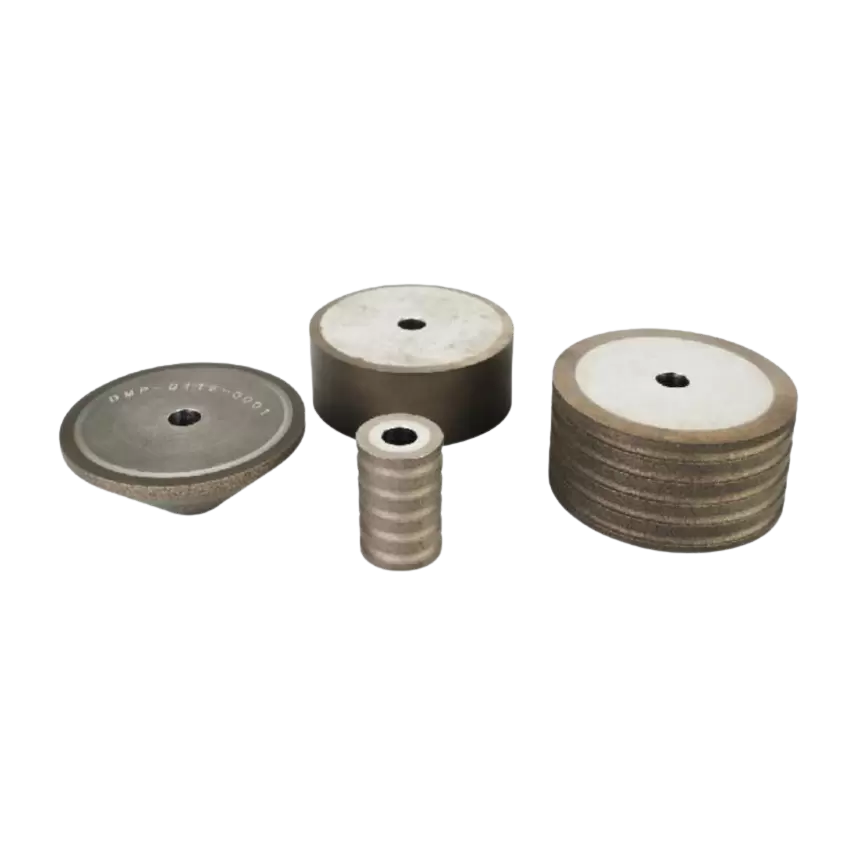
The choice between a diamond grinding wheel and a diamond grinding disc should also reflect the actual grinding equipment and process configuration. The name of the tool alone does not determine whether it is suitable; its dimensions, abrasive specification, structure, and operating conditions all need to match the application.
Wheel structure affects how abrasive particles interact with the workpiece and how grinding heat and chips are managed. A stable structure can help maintain consistent cutting behavior during continuous wafer processing.
Effective chip removal is particularly important because accumulated grinding debris can interfere with the cutting process. Heat generated in the grinding zone also needs to be controlled to avoid unnecessary thermal effects on the wafer and tool.
For semiconductor wafer applications, a diamond grinding disc for semiconductor wafer processing should therefore be evaluated not only by abrasive type but also by its cutting structure, dimensional specifications, and compatibility with the intended process.
For applications involving silicon and SiC wafers, the GRINDING DISC product range provides a relevant reference for semiconductor wafer grinding applications, including wafer thinning and grinding operations.
A grinding wheel cannot be evaluated separately from the parameters under which it will operate. Even a suitable wheel specification can produce different results when grinding depth, feed rate, or grinding speed changes significantly.
Grinding depth determines how much material is removed during each grinding operation. A greater grinding depth generally places greater demands on cutting ability and grinding force.
When selecting a wheel, manufacturers should consider whether the tool is intended for substantial material removal or controlled finishing. The wheel structure and abrasive characteristics should be able to support the required depth without excessive loading or unstable cutting.
Grinding feed rate affects material removal rate, grinding force, and surface quality. A higher feed rate can increase productivity, but it may also increase the load placed on the grinding wheel and workpiece.
The appropriate feed rate therefore needs to be considered together with the wheel specification, wafer material, and grinding depth. Changing one condition without considering the others can lead to inconsistent results.
Grinding speed influences abrasive interaction with the workpiece and the heat generated during processing. The appropriate operating range depends on the grinding wheel, equipment, and application.
The wheel's allowable rotational speed must always be compatible with the grinding machine. Operating outside the appropriate range can affect both processing stability and tool safety.
The total grinding amount is another important consideration when selecting a wheel. A process involving substantial thickness reduction has different tool requirements from one involving a small finishing allowance.
The selection should therefore reflect the complete grinding sequence rather than one isolated pass. This is especially important when coarse and fine grinding are used together.
A grinding wheel may have suitable abrasive characteristics but still be unsuitable if its physical specifications do not match the grinding equipment.
Before confirming a semiconductor wafer grinding wheel, manufacturers should check wheel dimensions, inner diameter, mounting requirements, rotational speed, and the applicable wafer size.
For example, semiconductor wafer grinding applications may involve 6-inch, 8-inch, or 10-inch wafers. The wheel must be compatible with the equipment and processing configuration used for the specific wafer size.
Operating speed is also important. The grinding equipment and wheel need to operate within appropriate conditions, while the selected specification should support stable grinding rather than simply meeting a dimensional requirement.
This is particularly important when replacing an existing wheel. A new wheel should not be selected only because its abrasive and grit appear similar to the previous tool. Dimensional and equipment requirements should be checked at the same time.
Surface quality is one of the main reasons why grinding wheel selection cannot be based solely on material removal rate.
The required wafer condition may include control of:
A wheel that removes material quickly but produces excessive surface defects may create additional processing requirements downstream. Conversely, a tool selected primarily for surface finish may not provide sufficient efficiency during a high-removal grinding stage.
The correct approach is to define the required surface condition first and then match the wheel characteristics and process parameters accordingly.
Surface damage can result from several interacting factors, including abrasive condition, grinding force, grit size, wheel wear, heat, and process parameters. The causes are discussed in surface damage during wafer grinding, which provides a more detailed explanation of how these factors affect wafer quality.
This relationship is particularly important for SiC wafers, where the combination of high hardness and brittle behavior can make surface damage more difficult to control.
Once the workpiece, grinding stage, and quality requirements are known, the wheel can be selected by matching those requirements with the tool specification.
| Processing Requirement | Selection Consideration |
|---|---|
| Silicon wafer grinding | Match abrasive and grit with material removal and surface quality requirements |
| SiC wafer grinding | Consider diamond abrasive, cutting stability, tool wear, and damage control |
| Coarse grinding | Prioritize material removal capability and stable cutting |
| Fine grinding | Give greater attention to surface quality, thickness control, and consistent cutting |
The selection process can be viewed as a sequence:
Workpiece material → Grinding stage → Material removal requirement → Surface requirement → Wheel specification → Equipment compatibility
This approach reduces the risk of choosing a wheel based on a single specification. For example, knowing that a wheel uses diamond abrasive does not automatically establish that it is suitable for a particular wafer. The grit size, structure, dimensions, operating conditions, and intended grinding stage still need to be evaluated.
The same principle applies when comparing different wafer grinding wheel specifications. Two wheels may both be designed for semiconductor applications but perform differently because their abrasive characteristics or structures are intended for different processing conditions.
For manufacturers, the most useful selection information is therefore not simply the wheel name. The supplier should understand the wafer material, wafer size, grinding stage, equipment, material removal requirement, and expected surface quality before recommending a specific specification.
A standard grinding wheel may be sufficient when the application matches an established specification. However, customization can become relevant when the equipment, workpiece, or processing requirements fall outside common conditions.
Typical considerations include specific equipment dimensions, unusual wafer processing conditions, special grinding stages, or particular surface-quality requirements.
Customization should begin with the actual process requirements rather than a request for a different specification without technical justification. The supplier may need information about the workpiece material, wafer size, equipment, operating speed, grinding stage, and quality target.
This information provides a practical basis for determining whether a standard wheel is suitable or whether a different abrasive, grit, structure, or dimension should be considered.
There is no single grinding wheel specification that is suitable for every semiconductor wafer application. The appropriate choice depends on wafer material, grinding stage, material removal requirement, surface quality, equipment, and operating conditions.
Diamond grinding wheel and grinding disc solutions are relevant to SiC wafer processing because diamond abrasive is suitable for demanding applications involving hard materials. The specific grit, structure, dimensions, and operating conditions still need to be matched to the grinding process.
Start with the grinding stage and required surface quality. Coarse grinding generally places greater emphasis on material removal, while fine grinding places greater emphasis on controlled cutting and surface condition. Wafer material and process parameters should also be considered before selecting the diamond grit size.
A single wheel may be capable of supporting more than one operation in some applications, but this should not be assumed. Coarse and fine grinding have different requirements for material removal, surface quality, and process control. The wheel specification should be evaluated against the actual process conditions.
Choosing a grinding wheel for semiconductor wafer processing requires a complete view of the grinding application. Wafer material determines the basic cutting requirements, while grinding stage affects the balance between material removal and surface quality.
Grit size, abrasive performance, wheel structure, grinding depth, feed rate, speed, and equipment compatibility then determine whether the selected wheel can operate effectively under the required conditions. For silicon and SiC wafers, these factors should be evaluated according to the actual processing objective rather than treated as fixed specifications.
A practical selection process therefore starts with the workpiece and ends with the complete grinding system: material, stage, removal requirement, surface quality, wheel specification, and equipment compatibility. This approach provides a more reliable basis for selecting a grinding tool and maintaining stable semiconductor wafer processing.