
Aug 20,2026
How to Extend the Service Life of Glass Grinding Wheels
A glass grinding wheel is expected to wear gradually as diamond abrasives are consumed during processing. In a stable grinding operation, the wear pattern should remain reasonably consistent, allowing the wheel to maintain its working profile and deliver predictable edge quality. When one area wears noticeably faster than another, however, the problem can extend beyond normal consumable wear.
Uneven wear on glass grinding wheels may be associated with machine alignment, wheel installation, grinding pressure, feed rate, wheel specification, cooling conditions, or the characteristics of the glass being processed. The challenge is that these factors can interact. A wheel may appear to be the source of the problem when the actual cause is excessive local pressure or an unstable machine setup.
For glass processors, identifying the cause early can help prevent profile distortion, edge defects, unnecessary wheel replacement, and production interruptions. This article examines the main causes of uneven wear, the effects on glass processing, practical ways to identify the source, and measures that can help maintain more consistent wheel performance.
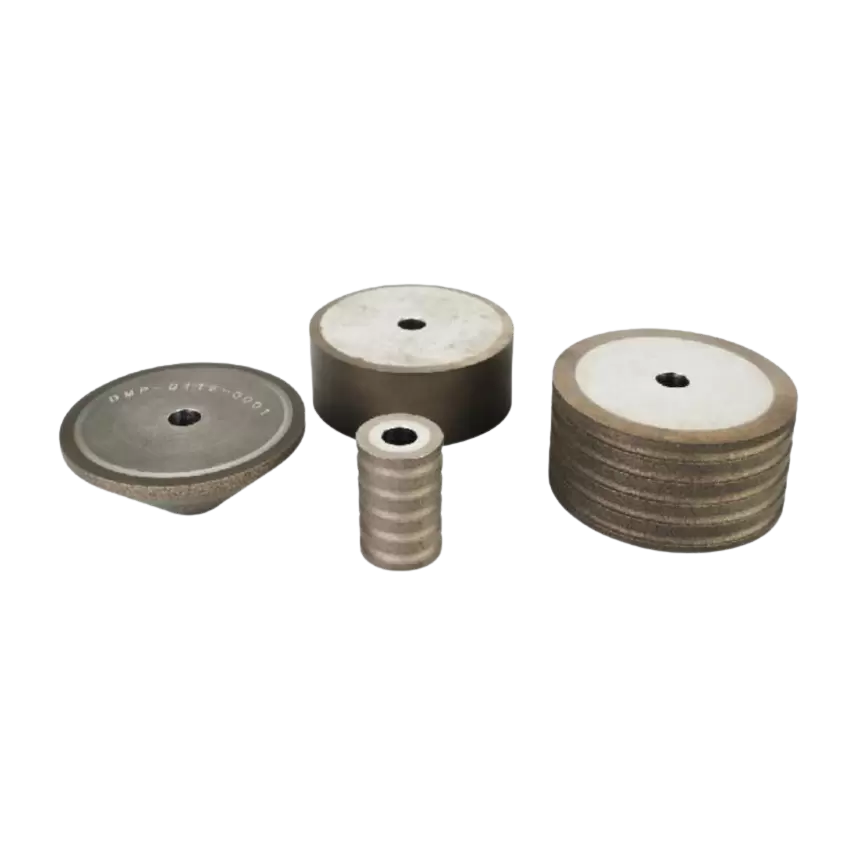
Normal wear is part of the working life of any diamond grinding wheel. Diamond particles gradually become worn, fractured, or released from the bond as the wheel removes material from the glass. Under stable conditions, this process should remain relatively predictable.
Uneven wear is different. It occurs when certain areas or sections of the wheel wear significantly faster than others. The difference may be visible on the working surface, or it may first appear through changes in the grinding result. A wheel can still look usable while its profile has already started to change.
Common signs include:
The significance of these symptoms depends on the application. A small change may have limited consequences during rough grinding, while the same change can become serious in precision edge processing. For automated production lines, even moderate profile changes can eventually affect consistency across a large number of glass panels.
It is therefore useful to treat an unusual wear pattern as a process signal rather than simply a sign that the wheel has reached the end of its life.
There is rarely one universal cause of glass grinding wheel wear. The wheel, machine, workpiece, grinding parameters, and cooling system all contribute to the actual contact conditions. When those conditions are not balanced, localized wear can develop.
Grinding pressure is one of the most direct factors affecting abrasive wear. When pressure is distributed evenly across the intended contact area, diamond abrasives can remove glass at a relatively stable rate. If pressure becomes concentrated in one area, that section of the wheel carries a greater share of the grinding load.
This can happen when the wheel does not contact the glass evenly, when the workpiece is not positioned correctly, or when the machine applies inconsistent pressure during feeding. A small alignment error may not be obvious at first, but repeated contact under the same conditions can accelerate wear in a particular section.
Excessive grinding pressure can also increase heat generation and abrasive loading. As local resistance increases, the affected area may wear faster than the rest of the wheel, gradually changing the wheel profile.
A correctly manufactured wheel can still perform poorly if it is installed incorrectly. Mounting errors, spindle runout, poor alignment, or an unstable fixture can change the actual contact between the wheel and glass.
For example, if the wheel is not seated properly on the spindle, the working surface may not rotate in a stable plane. Even a small amount of runout can create repeated high and low contact points. Over time, these variations can produce a recognizable uneven wear pattern.
Machine vibration deserves similar attention. Excessive vibration can increase local impact and reduce grinding stability. It may also make it difficult to distinguish a wheel problem from a machine problem because both can produce inconsistent edges.
For this reason, wheel inspection should not be separated from equipment inspection. When unusual wear appears shortly after installing a new wheel, checking mounting accuracy, spindle condition, alignment, and runout can be more useful than immediately replacing the wheel.
Grinding parameters directly determine how much mechanical and thermal load the wheel experiences. Feed rate, wheel speed, grinding depth, and the amount of material removed per pass all influence abrasive wear.
A high feed rate may increase production output, but if the wheel is not designed or conditioned for that workload, grinding resistance can rise. Excessive grinding depth can have a similar effect by increasing the amount of glass removed during each contact cycle.
The relationship between these variables is more important than any single setting. A parameter that works well on one machine or glass specification may not produce the same result on another production line.
For a more detailed discussion of this relationship, see How Grinding Parameters Affect Glass Grinding Wheel Performance.
The abrasive specification also affects wear behavior. Diamond grit size influences cutting action, surface finish, grinding resistance, and the way abrasive particles interact with the glass.
If the grit size does not match the application, the wheel may experience excessive resistance or fail to provide the intended balance between material removal and finish quality. Wheel diameter, profile, bond characteristics, and mounting dimensions also need to correspond with the machine and process.
This does not mean that a finer or coarser grit is inherently better. The correct specification depends on the glass thickness, removal requirements, desired edge quality, machine capability, and operating conditions.
A useful reference for this aspect is How to Choose Diamond Grit Size for Glass Grinding, which provides more detail on how grit selection relates to glass grinding requirements.
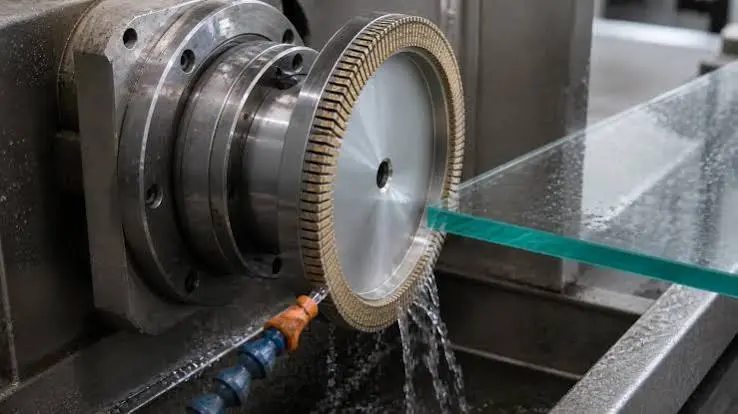
Heat is another factor that can contribute to unstable wear. Glass grinding generates heat at the contact zone, particularly when the grinding load is high. Effective cooling helps control this thermal load and keeps the process more stable.
The issue is not simply the amount of coolant. Distribution matters as well. If coolant reaches one part of the contact zone more effectively than another, thermal conditions may differ across the working area. Blocked nozzles, incorrect nozzle positioning, inadequate flow, or contaminated coolant can all reduce cooling effectiveness.
A stable cooling system also helps remove grinding debris from the contact area. When debris accumulates, grinding resistance may increase and interfere with the normal cutting action of the abrasive.
The first major consequence of uneven grinding wheel wear is a change in the wheel's working profile. As one section wears faster, the original geometry may no longer be maintained. This changes the way the wheel contacts the glass and can create additional instability.
The effect is often visible in edge quality. A worn or distorted profile may produce inconsistent edge geometry, rougher surfaces, or increased chipping. In applications where the glass edge must meet tight dimensional requirements, even a moderate change in profile can become a production concern.
Chipping is particularly important because it may have more than one cause. Wheel wear, grinding parameters, glass characteristics, machine condition, and cooling can all contribute. When chipping increases at the same time as uneven wheel wear, the two issues should be investigated together. A detailed reference is available in Why Does Glass Chip During Grinding? Causes & Solutions.
Uneven wear can also increase operating costs. A wheel may need to be replaced before its full abrasive capacity has been used because its profile or grinding performance has become unacceptable. Frequent replacement introduces material costs as well as machine downtime, setup work, and potential production interruptions.
For high-volume glass processing, consistency is often more important than simply achieving a high initial grinding speed. A wheel that maintains stable performance throughout a substantial portion of its service life can provide a more predictable production process.
When an unusual wear pattern appears, replacing the wheel immediately may solve the symptom without addressing the underlying cause. A more effective approach is to check the process systematically.
Start with the wheel itself. Inspect the working profile, abrasive surface, visible damage, and wear distribution. Compare the current profile with the expected geometry if dimensional records are available.
It is also useful to compare a newly installed wheel with the worn wheel. If the same area repeatedly develops excessive wear across different wheels, the cause may be related to machine setup or process conditions rather than an isolated wheel defect.
The next step is to inspect the equipment. Wheel mounting, spindle runout, alignment, fixture stability, and machine vibration should all be considered.
If possible, observe whether the abnormal wear corresponds to a particular contact position. A repeated pattern can provide useful evidence. For example, localized wear that occurs in the same section of the wheel after every installation may indicate a consistent mechanical or alignment issue.
Compare current production settings with previous stable settings. Pay particular attention to feed rate, wheel speed, grinding depth, and changes in production throughput.
A sudden increase in feed rate or grinding depth can change the load placed on the wheel. If uneven wear began after a process change, the timing itself can provide an important clue.
Coolant flow and nozzle positioning should be checked alongside the glass itself. Changes in glass thickness, production batches, edge geometry, or incoming material quality can alter the grinding load.
The following diagnostic relationship can be useful:
| Observed symptom | Possible cause | Main area to inspect |
|---|---|---|
| One side wears faster | Uneven contact or pressure | Wheel alignment and mounting |
| Profile changes rapidly | Excessive grinding load | Feed rate and grinding depth |
| Localized abrasive wear | Uneven contact or cooling | Contact zone and coolant distribution |
| Increased edge chipping | Wheel condition or process instability | Wheel specification and grinding parameters |
The goal is not to identify a single cause immediately. It is to narrow down which part of the process is producing the abnormal load.
Once the likely cause has been identified, corrective action should focus on restoring stable contact and load distribution.
Wheel selection should consider more than diameter and grit size. Glass type, thickness, edge geometry, required finish, machine configuration, and production volume all affect the appropriate wheel specification.
A wheel designed for a particular application can provide a better balance between cutting ability, profile retention, and wear resistance. This is especially relevant when processing different glass products on the same production line.
Consistent installation is essential for repeatable grinding. The mounting surface should be clean, the wheel should be seated correctly, and the spindle and fixture should remain in good condition.
Regular checks are particularly important when a production line runs for extended periods. Mechanical wear or accumulated debris can gradually affect alignment even when the original machine setup was correct.
Once suitable parameters have been established, unnecessary changes should be avoided. Increasing production speed without considering the resulting grinding load can shorten wheel life and introduce instability.
Parameter adjustments should be evaluated together with edge quality, wheel wear, vibration, and production output. A slightly lower feed rate may sometimes produce a better overall result if it significantly improves wheel stability and reduces replacement frequency.
Coolant should reach the grinding zone evenly and continuously. Nozzles should be checked for blockage or displacement, and the coolant system should be maintained according to the equipment requirements.
Stable cooling is particularly important when production conditions place a high load on the wheel. It can help control thermal variation and maintain more consistent grinding behavior.
Not every uneven wear pattern means that the wheel must be replaced immediately. The decision should be based on whether the wheel can still meet the required processing performance.
A wheel may need replacement when its profile has changed enough to affect edge geometry, when chipping or surface defects increase, or when grinding resistance and vibration become difficult to control. Dimensional consistency is another practical indicator, especially for precision glass applications.
The actual service life also varies according to the glass material, thickness, grinding depth, wheel specification, machine, and operating conditions. A fixed mileage value cannot represent every application accurately.
The important point is to avoid using a wheel simply because it still has visible abrasive material. If the wheel can no longer maintain the required grinding profile or edge quality, its practical service life may already have ended.
Wheel design has a direct influence on how consistently a diamond grinding wheel performs over time. Abrasive quality, bond characteristics, wheel geometry, profile retention, and manufacturing accuracy all affect the way the wheel responds to repeated grinding loads.
For glass processing, the balance between sharpness and wear resistance is particularly important. A wheel that cuts effectively but wears too quickly may increase replacement frequency. A wheel with strong wear resistance but insufficient cutting ability can increase grinding resistance and reduce process efficiency.
Manufacturing quality also matters. Accurate dimensions and proper dynamic balancing can help reduce vibration and support stable operation, particularly at higher spindle speeds. The objective is not simply to produce a wheel with a long theoretical life, but one that can maintain useful grinding performance throughout that life.
Application-specific design is another consideration. PV glass, automotive glass, and appliance glass can have different thicknesses, edge requirements, production volumes, and equipment configurations. A wheel specification that performs well in one application should not automatically be assumed to be optimal for another.
For example, Meijie's range of glass processing products includes dedicated solutions for different applications, including PV Glass Grinding Wheel, Appliance Glass Grinding Wheel, and Automotive Glass Grinding Wheel. These application-specific designs provide a basis for matching abrasive tools to different glass processing requirements rather than relying on a single universal specification.
Uneven wear on glass grinding wheels is usually a sign that the grinding conditions are not fully balanced. The cause may be mechanical alignment, installation, grinding pressure, processing parameters, wheel specification, cooling, or changes in the glass itself.
The most effective response is a structured inspection rather than immediate wheel replacement. Checking the wheel, machine, parameters, cooling system, and workpiece conditions can reveal where the additional load is being generated.
For production lines where edge quality and throughput both matter, the goal should be predictable wear rather than simply maximum wheel life. A properly matched glass grinding wheel, combined with stable machine conditions and controlled grinding parameters, can help maintain consistent edge quality while reducing unnecessary consumable and downtime costs.