
Aug 13,2026
PV vs Appliance vs Automotive Glass Grinding Wheels: What Are the Differences?
Glass grinding is a precision process in which the performance of the grinding wheel depends on much more than the abrasive itself. A wheel may deliver excellent results under one set of production conditions and show faster wear, edge chipping, or unstable finishing under another. The difference often comes from the way glass grinding parameters interact with the wheel, machine, glass material, and cooling conditions.
For manufacturers processing photovoltaic, automotive, appliance, and other technical glass, parameter control is closely related to production efficiency and tool consumption. Grinding speed, feed rate, grinding depth, grinding pressure, and coolant flow all influence the load placed on the wheel and the quality of the finished glass edge. Understanding these relationships provides a more practical way to improve glass grinding wheel performance without relying on a single parameter or changing tools unnecessarily.
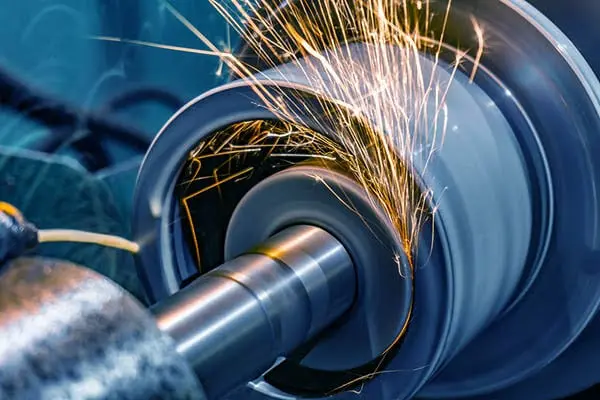
The main machining parameters determine how much material the wheel removes, how much force is generated at the contact area, and how much heat is produced during grinding. Changes in one parameter can also affect the role of the others, so production settings should be considered as a combination rather than isolated numbers.
| Grinding Parameter | Main Effect | Potential Risk When Excessive |
|---|---|---|
| Grinding speed | Heat generation and grinding efficiency | Excessive heat and wheel wear |
| Feed rate | Material removal rate and grinding load | Higher force and edge damage |
| Grinding depth | Stock removal and grinding force | Excessive wheel loading |
| Grinding pressure | Contact force and cutting stability | Faster abrasive wear |
| Coolant flow | Temperature and debris control | Poor cooling and unstable grinding |
The appropriate setting depends on factors such as glass thickness, edge profile, wheel diameter, diamond grit, bond type, machine configuration, and required surface finish. For this reason, there is no universal combination of grinding parameters that guarantees the same result on every production line.
The objective is to create a stable relationship between the wheel and the glass. When the cutting action remains controlled, the diamond abrasives can remove material efficiently while the wheel maintains its profile and the glass edge remains within the required quality range.
Grinding speed has a direct effect on the interaction between the diamond abrasives and the glass surface. Increasing speed can improve material removal and production throughput, but it also changes the amount of heat and mechanical energy generated during the process.
A higher grinding speed can be beneficial when the wheel specification and machine are designed for it. The cutting points on the wheel engage the glass more frequently, which can support efficient edge processing. However, increasing speed without considering cooling, wheel structure, or glass conditions may increase thermal loading and accelerate wheel wear.
It is tempting to associate higher wheel speed with higher productivity. In actual production, the relationship is more complicated. If the speed becomes too high for the selected wheel and cooling system, the additional heat can reduce process stability and increase the risk of surface or edge defects.
The condition of the grinding wheel also matters. A wheel with appropriate diamond concentration and bond characteristics may tolerate demanding conditions better than a wheel designed primarily for a different processing range. Machine rigidity, dynamic balance, coolant delivery, and glass thickness also influence the practical upper limit.
The goal should therefore be a stable grinding wheel speed that supports material removal without creating unnecessary thermal or mechanical stress. A slightly lower speed with stable wheel life and consistent edge quality may provide a better production result than maximum speed with frequent wheel replacement.
The feed rate determines how quickly the glass moves through the grinding operation. It has a direct relationship with material removal rate and the amount of work required from the grinding wheel during a given period.
When feed rate increases, the wheel generally has to remove more material over the same period. If other conditions remain unchanged, the grinding load can rise. This can influence abrasive wear, wheel temperature, machine vibration, and the quality of the processed edge.
A high grinding feed rate can be valuable for high-volume production, particularly where production efficiency is a major consideration. However, the wheel must have sufficient cutting ability and the machine must be capable of maintaining stable contact with the glass.
Excessive feed can increase grinding force and cause the abrasive grains to experience greater mechanical stress. Depending on the glass and wheel configuration, this may contribute to edge chipping, rougher surfaces, or accelerated wheel wear.
The solution is not necessarily to reduce feed rate as much as possible. Instead, manufacturers should evaluate feed rate together with wheel sharpness, grinding depth, glass thickness, and machine capability.
A lower feed rate generally reduces the instantaneous grinding load, but it does not automatically produce the best result. Production capacity may decrease, while the additional processing time can increase the cost per piece.
The right feed rate is therefore a compromise between grinding efficiency, wheel life, and edge quality. When a production line experiences sudden increases in chipping or wheel consumption, feed rate is one of the first parameters worth checking.
For a more detailed discussion of edge defects, glass chipping during grinding can be examined together with other factors such as wheel condition, machine stability, and grinding load.
Grinding depth describes the amount of material removed during a grinding pass. It is particularly important when processing glass edges because a larger depth of cut increases the amount of material that the wheel must remove during each contact.
A small grinding depth generally places less load on individual abrasive grains. A deeper cut can improve material removal efficiency, but it also increases the grinding force required to maintain the process.
When grinding depth increases, more glass enters the grinding zone. If the wheel and machine are not designed for the increased load, the process may become unstable.
The wheel's cutting ability becomes especially important in this situation. A sharp diamond wheel can maintain effective cutting action, while a worn or unsuitable wheel may generate more friction instead of efficiently removing material.
This distinction is important because high grinding force is not always a sign of insufficient wheel hardness. It can also indicate an unsuitable combination of wheel specification and machining parameters.
Excessive depth of cut can increase the possibility of edge damage, particularly when combined with a high feed rate. The resulting mechanical stress can contribute to chipping or uneven edge formation.
For precision glass processing, a controlled grinding depth allows the wheel to remove material progressively while maintaining the required edge geometry. Production engineers should consider the required stock removal, wheel profile, glass thickness, and machine capability before increasing the depth simply to improve throughput.
Grinding pressure represents the mechanical force applied between the wheel and the glass. It affects how aggressively the diamond abrasives engage with the workpiece.
A certain level of pressure is necessary for effective cutting. Too little pressure can reduce material removal efficiency, while excessive pressure may increase abrasive wear and heat generation.
High grinding pressure increases the load on individual diamond grains and can accelerate wear if the wheel structure is not suited to the application. It may also increase the possibility of glass edge damage.
Pressure becomes particularly important when other parameters are already demanding. A high feed rate combined with a deep cut and excessive pressure can create a substantially higher grinding load than any single parameter would suggest.
Low pressure is not automatically better. If the wheel cannot engage the glass effectively, cutting efficiency may fall and production time may increase.
The objective is controlled contact rather than maximum or minimum pressure. A well-matched grinding force allows the abrasive grains to cut efficiently while limiting unnecessary friction and mechanical stress.
Cooling is sometimes treated as a secondary issue, but it has a direct influence on grinding stability. The contact between diamond abrasives and glass generates heat, while glass and wheel materials respond differently to temperature changes.
A suitable cooling system helps control the temperature around the grinding zone and can also assist in removing fine grinding debris.
When grinding temperature rises excessively, the process may become less stable. Heat can affect wheel wear and may also influence the quality of the glass edge.
The effect becomes more noticeable when production parameters are pushed toward higher speed or feed rates. Increasing productivity without increasing cooling capacity accordingly can create a mismatch between the machine settings and the actual thermal conditions in the grinding zone.
Adequate coolant flow should reach the actual grinding area rather than simply being present somewhere near the machine. The position, consistency, and volume of coolant delivery all influence how effectively heat and grinding debris are controlled.
For continuous glass processing, cooling stability is particularly important. Fluctuations in coolant delivery can create changes in temperature and grinding conditions, making it more difficult to maintain consistent edge quality.
Grinding wheel life is closely connected with how the wheel is used. Even a high-quality glass grinding wheel can experience unnecessary wear when operating conditions consistently exceed the practical requirements of the application.
Several parameter-related factors can contribute to premature wear:
This does not mean that conservative parameters always produce longer tool life at lower cost. A very low feed rate, for example, may reduce productivity enough to offset any improvement in wheel consumption.
The more useful objective is to establish a balance between grinding wheel wear, production rate, edge quality, and machine stability. For additional guidance on maintaining wheel performance over longer production cycles, see How to Extend the Service Life of Glass Grinding Wheels.
Grinding parameters cannot be separated from the design of the wheel. A change that is appropriate for one wheel may not be suitable for another.
Diamond grit size, bond type, abrasive concentration, wheel profile, and wheel dimensions all influence how the tool behaves during grinding. This is why simply copying machining parameters from another production line can produce disappointing results.
Diamond grit size influences cutting behavior and the resulting surface finish. Coarser grits are generally associated with more aggressive material removal, while finer grits are more suitable when surface quality and finishing requirements become more demanding.
The appropriate choice depends on the stage of processing and the desired result. A wheel intended for heavy edge removal should not necessarily use the same grit configuration as a wheel used for fine finishing.
For a more detailed explanation of grit selection, see How to Choose the Right Diamond Grit Size for Glass Grinding.
The bond determines how securely the diamond abrasives are held and how the wheel behaves as the abrasive grains wear. Different bond systems can offer different combinations of sharpness, wear resistance, profile retention, and cutting behavior.
Wheel geometry also matters. A profile grinding wheel must maintain its intended shape during processing, while a conventional edge grinding wheel may have different requirements.
The best combination is therefore not simply the hardest or most wear-resistant wheel. It is the wheel whose characteristics match the glass, machine, production speed, and required edge quality.
Glass products vary considerably in thickness, geometry, edge requirements, and production volume. A parameter strategy that works well for one application may require adjustment for another.
Rather than looking for a universal setting, manufacturers should evaluate the relationship between:
Glass Type + Machine + Wheel Specification + Grinding Parameters + Production Target
This approach is especially important for high-volume applications where small differences in wheel life or edge quality can have a significant effect on total production cost.
Photovoltaic glass processing often places strong emphasis on production throughput, dimensional consistency, and stable edge quality. The wheel must maintain reliable performance across extended production cycles.
A PV glass grinding wheel should therefore be selected according to the processing equipment, glass thickness, required edge profile, and production conditions. For high-speed lines, the relationship between feed rate, wheel sharpness, cooling, and service life deserves particular attention.
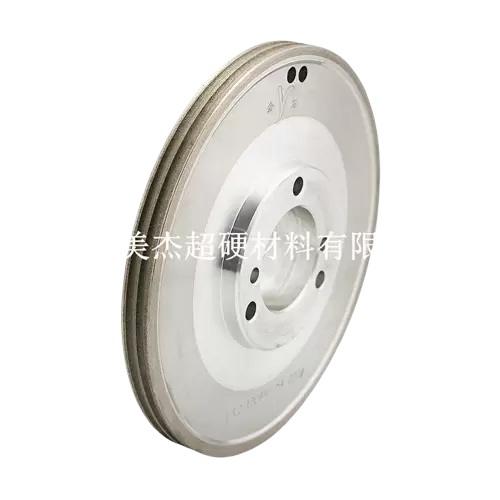
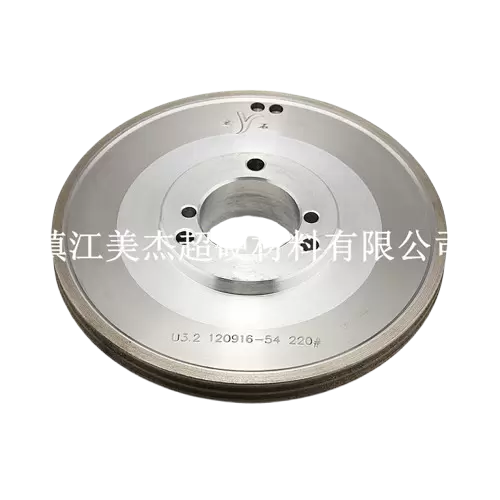
For example, Meijie's PV glass grinding wheel is designed for photovoltaic glass processing and is available in different specifications, with reported processing capabilities for glass thicknesses from 2 to 18 mm. The product page also lists diamond grit options from 80# to 400# and multiple wheel profiles for different edge grinding requirements.
Automotive glass requires stable dimensional accuracy and consistent edge processing. The wheel needs to maintain its profile while handling the specific requirements of automotive glass production.
An automotive glass grinding wheel should be matched to the edging equipment and processing method. In this application, parameters should be evaluated not only for removal efficiency but also for profile retention and edge consistency.
Meijie's automotive glass grinding wheel is designed for customized compatibility with different glass edging machines and supports OEM adjustments according to specific processing requirements.
Home appliance glass can involve demanding requirements for appearance, edge finish, dimensional consistency, and production efficiency. A stable grinding process helps reduce variation between finished pieces.
A home appliance edge grinding wheel can be selected according to the machine, glass thickness, edge profile, and required finish. Parameter optimization should focus on achieving the required surface quality without sacrificing production efficiency or creating unnecessary wheel wear.
When a production line develops a grinding problem, changing the wheel immediately is not always the best first step. The wheel may be suitable, while the actual issue comes from an unsuitable combination of machining conditions.
| Grinding Problem | Possible Parameter Issue | What to Check |
|---|---|---|
| Fast wheel wear | Excessive speed, feed rate, or pressure | Machine settings and wheel condition |
| Glass chipping | Excessive grinding load | Feed rate, depth, and pressure |
| Rough edges | Unstable grinding conditions | Wheel condition and parameters |
| Excessive heat | High speed or insufficient cooling | Speed and coolant flow |
| Low efficiency | Conservative feed or unsuitable wheel | Feed rate and wheel specification |
For example, rapid wheel wear accompanied by high temperature may point toward an excessive speed or insufficient cooling problem. If chipping appears after an increase in feed rate, the additional grinding load should be investigated before assuming that the wheel specification is defective.
Likewise, rough edges may result from a worn wheel, unsuitable grit size, unstable machine movement, or an inappropriate parameter combination. The most reliable troubleshooting process examines the complete grinding system rather than changing one component without identifying the cause.
There is no single “best” setting for every glass grinding wheel. Grinding speed, feed rate, depth of cut, pressure, cooling, and wheel specification all influence one another.
The most effective production strategy is to optimize these factors together. A small adjustment in feed rate may allow a higher grinding speed, while a change in wheel specification may make it possible to maintain productivity at a lower grinding load.
The final target should be a balance between grinding efficiency, wheel life, edge quality, and process stability. For manufacturers processing photovoltaic, automotive, or appliance glass, this balanced approach can provide a more reliable foundation for consistent long-term production.
Effective glass grinding is not simply a matter of choosing a high-performance wheel or increasing machining speed. The actual result depends on how the wheel, glass, machine, and grinding parameters work together.
Careful control of speed, feed rate, grinding depth, pressure, and cooling can help manufacturers reduce unnecessary wheel wear while maintaining the required edge quality. Combined with the right diamond grit, bond, and wheel design, parameter optimization provides a practical path toward more stable and cost-efficient glass processing.