
Sep 11,2026
What Causes Surface Damage During Wafer Grinding?
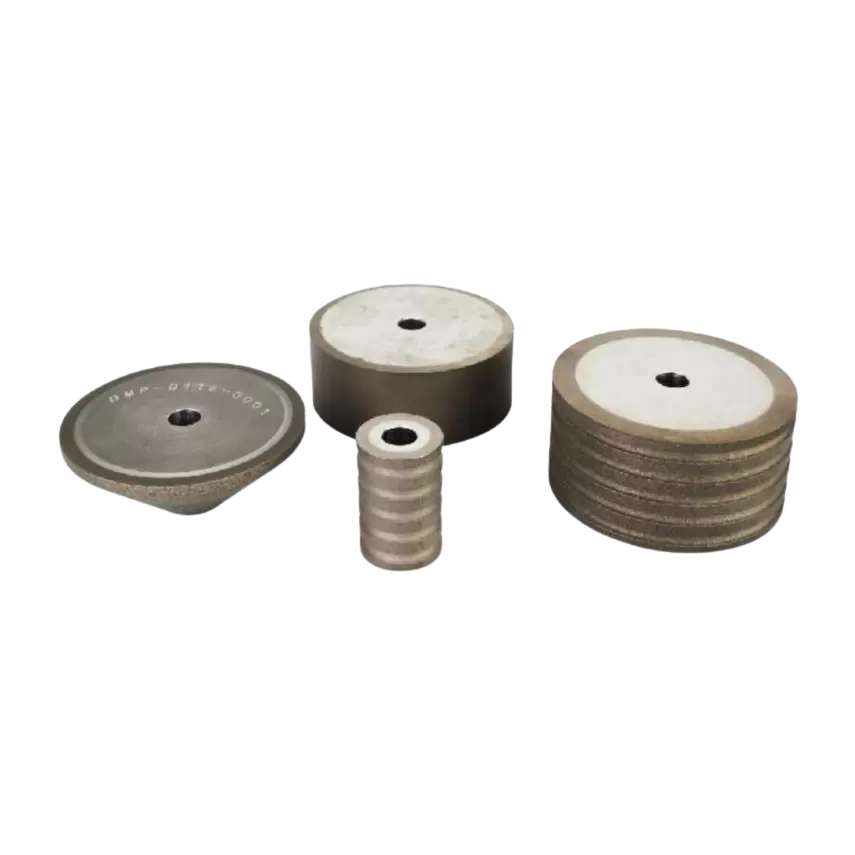
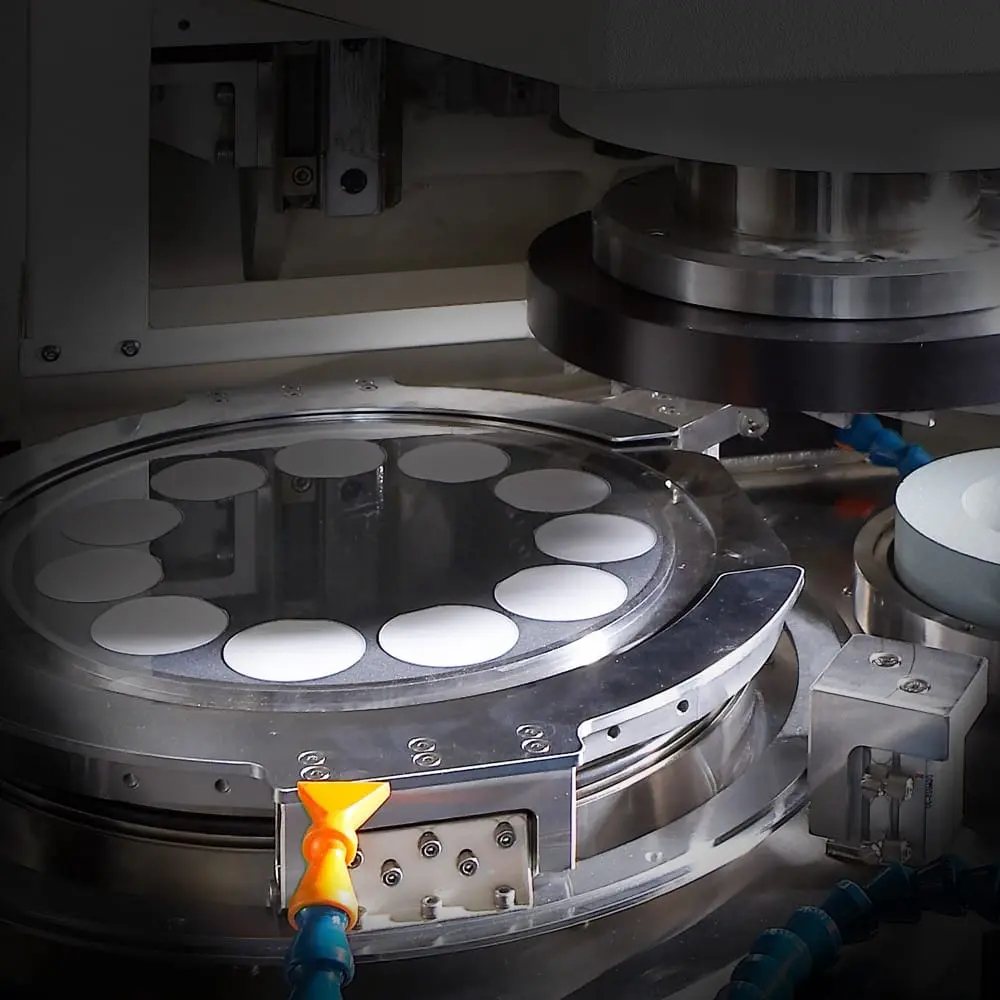
Large-size TFT/LCD glass processing places specific demands on edge quality, dimensional accuracy, and production consistency. Selecting suitable grinding discs for TFT/LCD panel processing requires more than matching a tool to the glass dimensions. The glass material, edge profile, required finish, machine configuration, and production conditions all influence the final choice.
A grinding disc that performs well in one application may not deliver the same results under different operating conditions. Manufacturers therefore need to assess both the tool specification and the requirements of the complete machining process. This guide explains the main factors involved in grinding disc selection, how tool characteristics affect processing results, and what information should be confirmed before choosing a disc for large-size display glass.
Large-size TFT/LCD panels require controlled edge processing to meet dimensional and appearance requirements. Depending on the product and manufacturing process, the operation may involve edge grinding, chamfering, or shaping a defined glass profile. Each task places different demands on the grinding tool.
The finished edge is an important consideration because chips, irregular profiles, and excessive surface damage can affect subsequent handling or assembly. The required quality level depends on the panel design and its intended application. A disc suitable for basic material removal may not be the best choice when tighter dimensional tolerances or a more refined edge finish are required.
Panel dimensions also influence how the workpiece is supported and moved through the machining process. Large glass panels need suitable positioning and support to reduce unwanted movement during grinding. The machine's working range, clamping arrangement, and tool path must accommodate the panel without compromising processing stability.
However, panel size alone does not determine the correct grinding disc. Two panels of similar dimensions may require different tools because their glass specifications, edge geometries, production equipment, or quality requirements differ. The selection process should therefore begin with the actual machining task rather than a general assumption that larger panels always need larger or more aggressive discs.
For manufacturers reviewing different solutions for display glass processing, the relationship between the glass specification, machining method, and required edge condition provides a more useful starting point than panel dimensions alone.
Choosing a suitable grinding disc involves evaluating the workpiece, abrasive characteristics, tool geometry, and operating conditions together. These factors are related, but they should not be treated as interchangeable. A suitable abrasive cannot compensate for an incompatible disc profile, and the correct tool dimensions do not guarantee a satisfactory finish if the process conditions are unsuitable.
The first step is to identify the glass being processed and the operation the disc must perform. TFT/LCD manufacturing uses glass with application-specific dimensional and surface requirements, so the selection should be based on the actual workpiece rather than the broad label of display glass.
The intended operation also matters. Edge grinding, chamfering, and profile machining do not necessarily require the same tool geometry or contact conditions. For example, a tool intended to remove material along a straight edge may not be appropriate for producing a particular chamfer or shaped profile. The required edge geometry should be clear before the disc is selected.
Manufacturers should also distinguish between the amount of material that must be removed and the quality of the finished edge. A process focused on initial material removal may place different demands on the disc from a finishing operation. Where several stages are used, each stage should be assessed according to its role in the overall process.
Glass thickness, workpiece dimensions, edge design, and dimensional tolerances should be confirmed together. These details help establish the required tool geometry and machining approach. If the glass specification or drawing is incomplete, confirming it before purchasing a disc can prevent an otherwise suitable tool from being applied to the wrong operation.
Abrasive characteristics affect how a grinding disc interacts with the glass. The abrasive type must be suitable for the material and intended operation, while grit size influences the balance between material removal and the resulting surface condition.
Coarser abrasives are generally associated with more aggressive material removal, whereas finer abrasives are commonly used when a more refined finish is required. This is a general selection principle, not a guarantee that a particular grit will deliver a specific edge quality. Actual results depend on the abrasive system, disc construction, machine conditions, and workpiece characteristics.
The appropriate grit size should therefore be selected against the required processing result. If the main objective is to remove material efficiently, the tool must still maintain acceptable edge integrity. If the priority is a controlled finish, the process must achieve that result without creating unnecessary machining time or tool wear.
Where a process includes roughing and finishing stages, the abrasive specifications should be considered as part of the complete sequence. A single disc may not be the most appropriate choice for every stage. The decision should reflect the amount of material to be removed, the quality required at each stage, and whether the machine can support the intended process.
Manufacturers should avoid selecting grit size based only on a general recommendation or a specification used for another glass product. Supplier guidance and controlled trials can help establish whether a proposed abrasive specification is appropriate for the actual panel and operating conditions.
The geometry of a grinding disc must correspond to both the machining operation and the equipment. Relevant dimensions may include the outer diameter, thickness, working profile, mounting dimensions, and other features defined by the machine interface. These details should be checked against the equipment documentation and the required edge shape.
Disc geometry influences the area and manner of contact between the tool and the glass. A profile designed for one edge shape may not produce the intended result on another. Similarly, an incorrect tool dimension can affect machine compatibility, working clearance, or the ability to follow the required machining path.
Tool selection should begin with the machine's permitted disc dimensions and mounting requirements. The desired edge profile and machining sequence can then be used to narrow down suitable options. This approach reduces the risk of choosing a disc based solely on a product name or a nominal diameter without checking whether the tool can perform the required operation.
For a dedicated application reference, manufacturers can review the TFT LCD panel grinding disc product page. The actual suitability of any disc still needs to be checked against the required profile, machine interface, and operating conditions. A product page is a starting point for evaluating specifications, not a substitute for confirming compatibility with the intended process.

A grinding disc must operate within the conditions permitted by both the tool and the machine. Before selection, manufacturers should check spindle speed, mounting arrangement, feed conditions, available working clearance, and the cooling method used in production. These requirements determine whether the disc can be installed and operated appropriately.
Spindle speed and feed rate should not be selected independently of the disc specification. A setting that is suitable for one tool or machine may not be suitable for another. The permitted operating range, equipment instructions, and supplier recommendations should be used to establish the applicable limits.
Clamping and workpiece support are also important. Movement or vibration during processing can affect edge consistency, while unsuitable support may contribute to unstable contact between the tool and the glass. These issues should be evaluated alongside disc selection rather than attributed automatically to abrasive quality.
Cooling and debris removal should be considered according to the machine and process requirements. The chosen arrangement needs to support stable operation and should be compatible with the tool manufacturer's instructions. No single cooling approach should be assumed suitable for every grinding disc or production line.
For additional guidance on equipment-related considerations, see grinding wheel requirements for CNC glass edge processing. Although machine configurations differ, checking tool dimensions, operating conditions, and machine compatibility is relevant when assessing grinding solutions for display glass.
The purpose of selecting a grinding disc is not simply to find a tool that removes glass. The disc must perform the required operation while maintaining acceptable quality and production stability. These outcomes depend on the interaction between the tool, machine, glass, and machining parameters.
Edge quality is one of the main evaluation criteria. Depending on the application, manufacturers may need to control edge chips, surface roughness, profile accuracy, and consistency across the processed panel. These characteristics should be evaluated against defined product requirements rather than judged only by visual appearance.
Grinding conditions can also affect the balance between material removal and surface damage. Excessive or unsuitable machining conditions may contribute to edge defects, but the cause should be investigated systematically. Tool condition, machine stability, workpiece support, and operating parameters may all require examination before corrective action is taken.
Processing efficiency involves more than the speed of material removal. A disc that removes material quickly may not be the most productive choice if it causes unacceptable defects, requires frequent replacement, or creates additional finishing work. Conversely, an overly conservative process may produce acceptable edges but fail to meet production requirements. The aim is to find a workable balance for the actual manufacturing conditions.
Tool life should be assessed under comparable operating conditions. Differences in glass specifications, machine settings, cooling arrangements, and production schedules can make simple service-life comparisons misleading. Manufacturers should record tool usage and processing results under consistent conditions before concluding that one disc offers a meaningful advantage over another.
When comparing grinding disc options, the following criteria provide a practical basis for evaluation:
Edge quality: conformity to the required profile, dimensional tolerances, and acceptable edge condition.
Processing efficiency: material removal, cycle time, and the amount of additional finishing required.
Tool life and stability: wear behaviour, replacement frequency, and consistency during repeated production.
These criteria should be considered together. A disc should not be judged on one favourable result if it creates problems elsewhere in the process. Where performance differences are uncertain, a controlled trial using the intended glass and machine is more reliable than assuming that a particular abrasive specification will always produce the best outcome.
Before requesting a quotation or confirming an order, manufacturers should prepare enough technical information for the supplier to evaluate the application. A product name or panel size alone may not provide sufficient information to identify a suitable disc. Clear requirements help narrow the options and reduce the risk of selecting a tool that cannot be used as intended.
The most useful information includes the glass specification, the machining operation, the target edge profile, and the equipment details. Drawings or samples may help clarify the required geometry when written descriptions are insufficient. Manufacturers should also explain the quality criteria that the finished edge must meet.
Production conditions are another part of the assessment. Expected output, operating schedule, existing machining stages, and tool replacement requirements may influence the practical choice. These details do not replace technical compatibility checks, but they help suppliers understand the operating environment in which the disc will be used.
Before finalizing the selection, confirm the following information:
Glass and machining requirements: glass type, dimensions, thickness, edge profile, and required finish.
Tool and machine compatibility: disc dimensions, mounting interface, spindle limits, feed conditions, and cooling arrangements.
Production and quality targets: dimensional tolerances, acceptable edge condition, expected output, and tool-life expectations.
After the initial review, any proposed disc should be checked against the supplier's specifications and the machine manufacturer's operating limits. Where the application is new or the result is uncertain, a trial can be used to evaluate edge quality, dimensional accuracy, process stability, and wear under actual conditions. The acceptance criteria should be agreed in advance so that the results can be assessed consistently.
This verification step is particularly important when replacing an existing disc with a different specification. Similar dimensions or a comparable product description do not automatically mean that two discs are interchangeable. The replacement must be suitable for the machine, the required edge profile, and the established process conditions.
Selecting grinding discs for TFT/LCD panel processing requires a combined assessment of glass specifications, machining requirements, abrasive characteristics, tool geometry, and machine compatibility. Large panel dimensions are relevant, but they should not be used as the sole basis for choosing a disc.
The most suitable option is one that meets the required edge quality and dimensional accuracy while supporting stable production under the intended operating conditions. Manufacturers should confirm technical specifications before ordering and evaluate uncertain applications through controlled testing. This approach provides a more dependable basis for selecting a grinding disc than relying on a single parameter or a general-purpose recommendation.